-
Title
-
Time’s Salad
-
Creator
-
Georgakopoulou, Athanasia
-
Abstract
-
This installation not only highlights the cycle of decay and rebirth but also draws a direct connection to the concept of recycling in nature. This process mirrors how ecosystems continuously repurpose matter, ensuring nothing is truly wasted. The artwork becomes a living, evolving entity, demonstrating how decomposition is not an end but a transition—where decay gives rise to new organisms, seemingly emerging from nothing. Through this, the project emphasizes the unseen yet essential role of natural recycling in sustaining life. In the end, it's a reflection on how life changes, with every ending leading to a new beginning. Decay is not an ending, but a vital, ongoing evolution.
-
Artist Statement
-
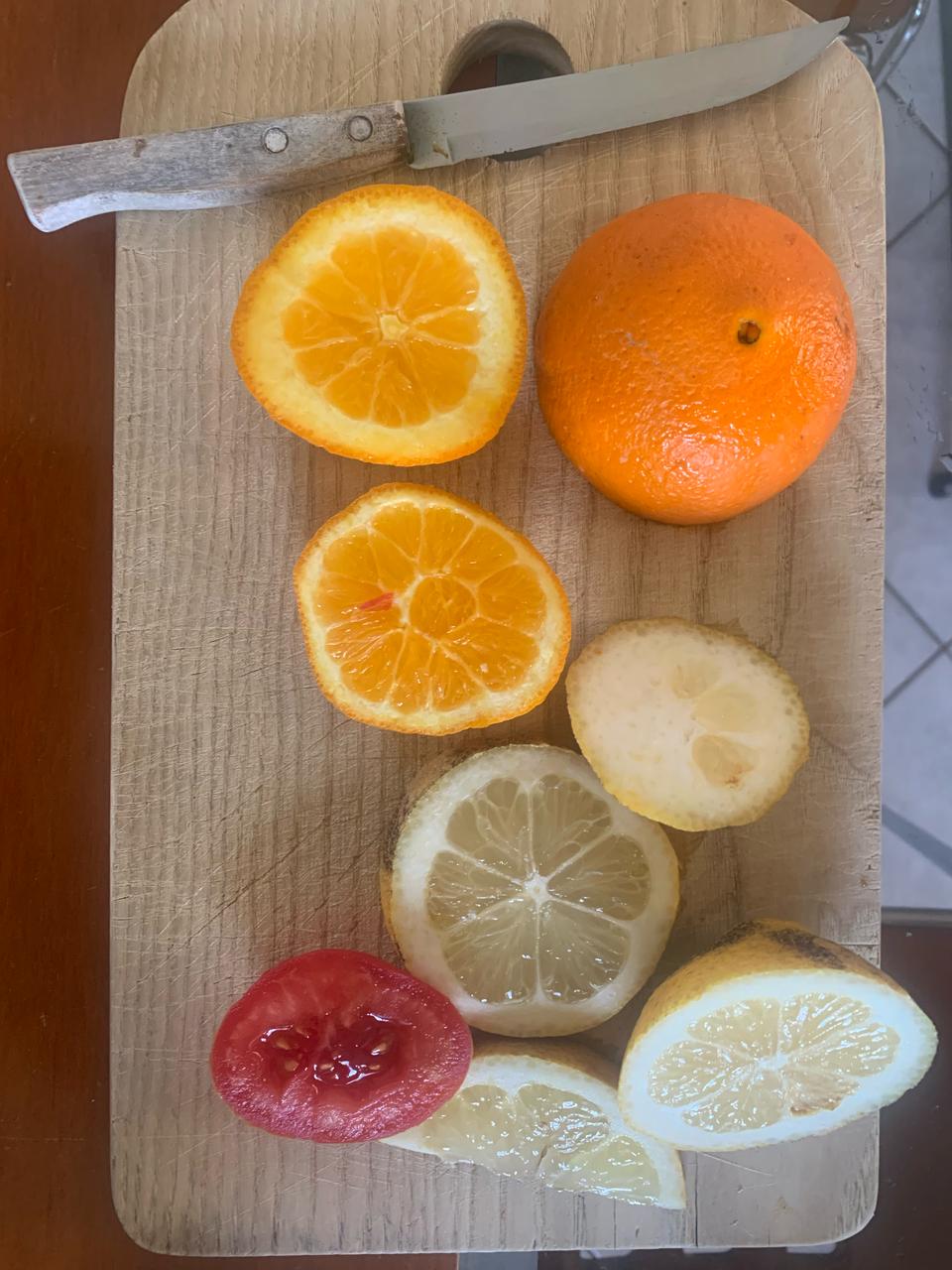
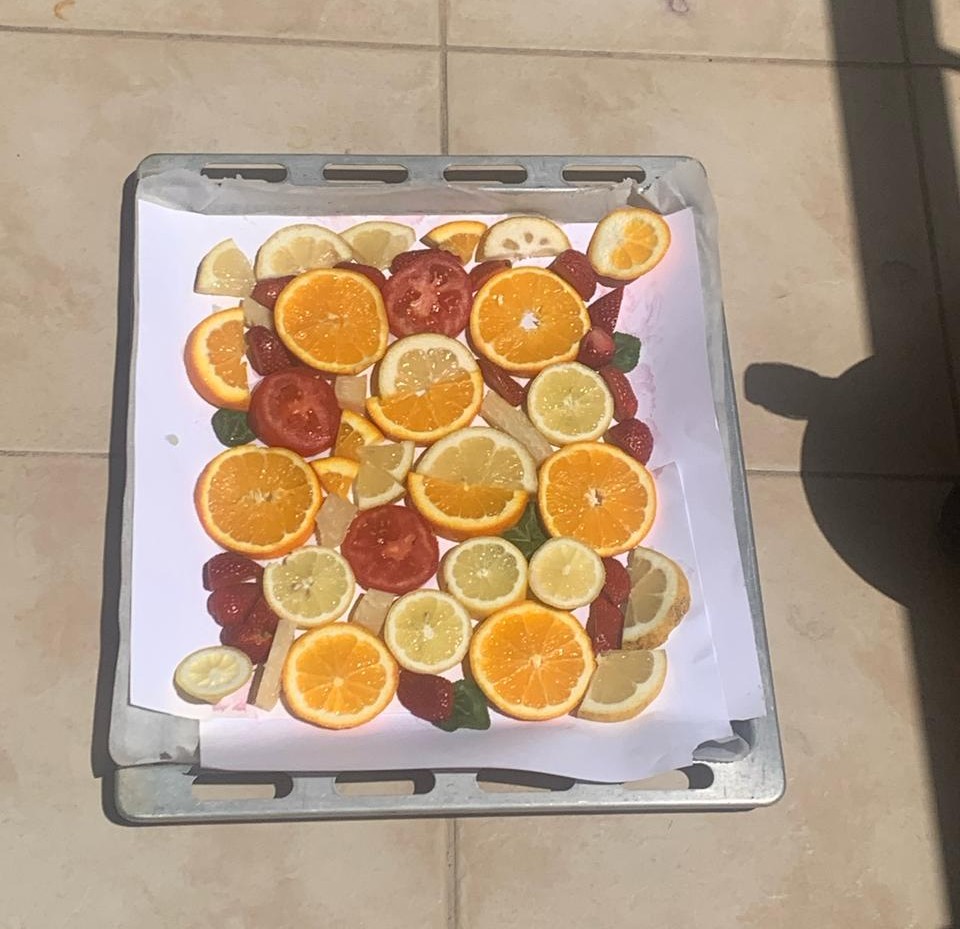
Inspired by Andy Goldsworthy’s work in Rivers and Tide, I used lemons, oranges, tomatoes, some blocks of cheese and strawberries and I arranged it in a way to look like a salad. The vivid hues of yellow, orange, red, and green stand out boldly, creating a striking visual contrast that emphasizes the freshness and vitality of the materials in their initial state. My intention with this arrangement is to observe the transformation they will undergo over time.
As the days pass, I will document the shifts in color, texture, and shape. The bright skins of the fruits will dull, wrinkle, and darken, the leaves will wither, and perhaps even crumble and the cheese will be moldy, each change marking a step in their journey through decomposition.
What intrigues me most is the unpredictability of this transformation. Although we understand that decay is an inevitable process, the specific ways in which each element will alter—how the colors will fade, merge, or intensify, how the forms will collapse or distort—remain a mystery until revealed through time. This evolving composition will serve as a living artwork, continuously reshaped by natural forces beyond my control.
As six days passed, the leaves dried out, the tomatoes developed the most mold and turned black, and the colors of the lemons and oranges and strawberries faded, and the blocks of cheese became stale and moldy. The whole process happened during sunny days.
This installation not only highlights the cycle of decay and rebirth but also draws a direct connection to the concept of recycling in nature. As organic materials break down, they provide nourishment for new life—microbes, fungi, and insects thrive, transforming the remnants into fertile soil. This process mirrors how ecosystems continuously repurpose matter, ensuring nothing is truly wasted. The artwork becomes a living, evolving entity, demonstrating how decomposition is not an end but a transition—where decay gives rise to new organisms, seemingly emerging from nothing. Through this, the project emphasizes the unseen yet essential role of natural recycling in sustaining life.
Mold is often seen as an unwelcome guest, something people go to great lengths to prevent and remove. It appears in damp corners, on forgotten food, and in decaying structures, symbolizing neglect and decay. Yet, despite being unwanted, mold is an inevitable force of nature, breaking down organic matter and playing a crucial role in the ecosystem. It thrives in the spaces we try to control, reminding us that nature operates on its own terms. In the context of this project, mold becomes both a disruptor and a creator, transforming materials into unpredictable ways. While humans resist its presence, mold is essential for recycling nutrients, continuing the cycle of life even in places where it is not invited. It challenges our perception of cleanliness and permanence, showing that decay is not just destruction but a necessary step toward renewal.
Through this project, I aim to capture not just the physical changes but also to reflect on the passage of time, and the beauty inherent in both growth and decline. In the end, it's a reflection on how life changes, with every ending leading to a new beginning. Decay is not an ending, but a vital, ongoing evolution.
-
Keywords
-
still life
-
ephemeral
-
cycle of life
-
Subject
-
Visual Arts
-
Date Available
-
May 22-23, 2025
-
Type
-
Photographs
-
Course
-
AR3110 Time Based Media II L5
-
Instructor
-
Nelson, Jennifer
-
Session
-
Visual Arts Exhibition
-
Location
-
Arts Center Gallery
-
Event
-
Year 2025 | 9th Annual Student Research and Creative Arts Symposium