-
Title
-
“Είπα στους δικούς σου ότι έφτασες” (I told your parents you arrived)
-
Creator
-
Gesthimani, Kapralou
-
Abstract
-
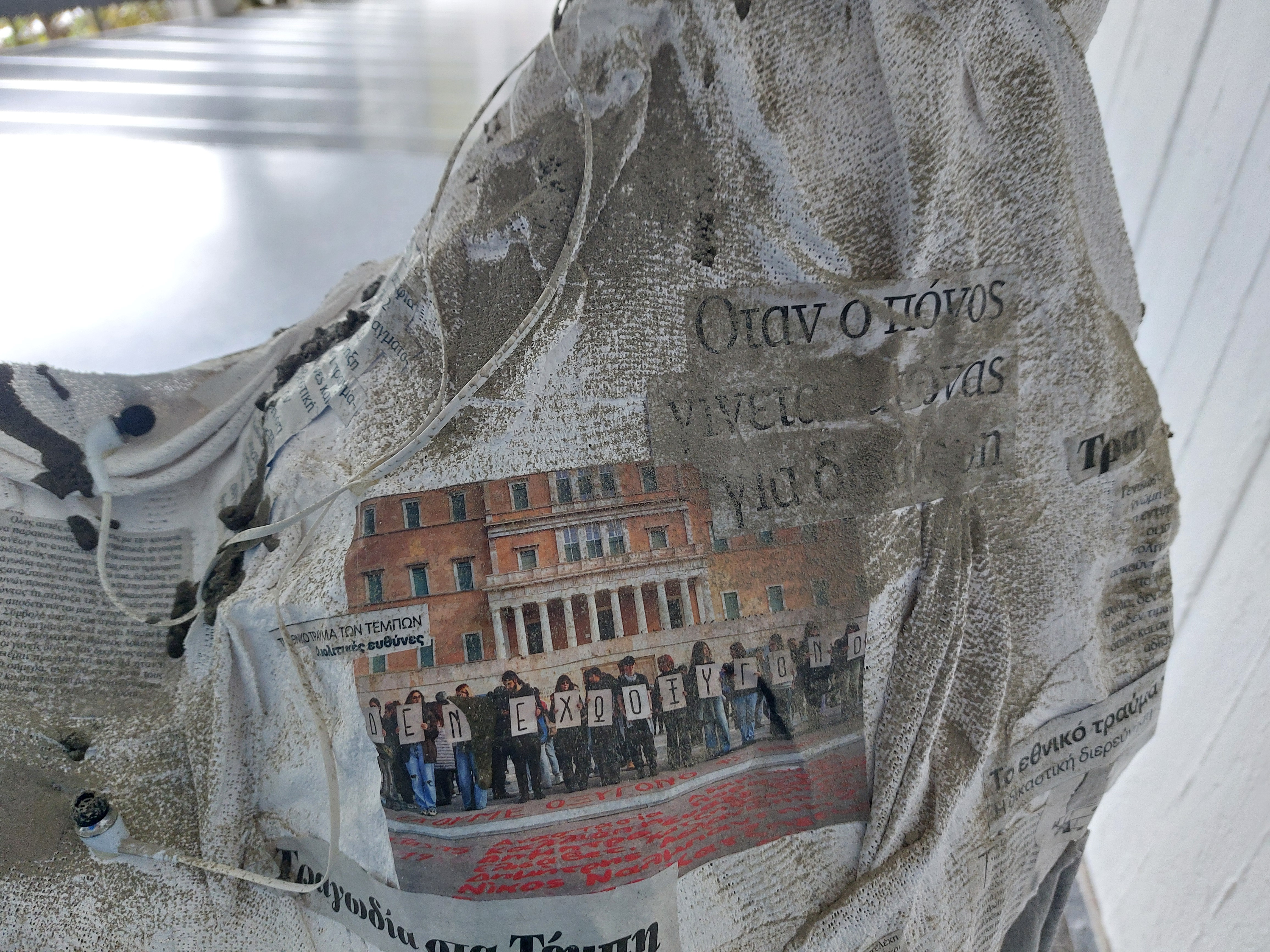
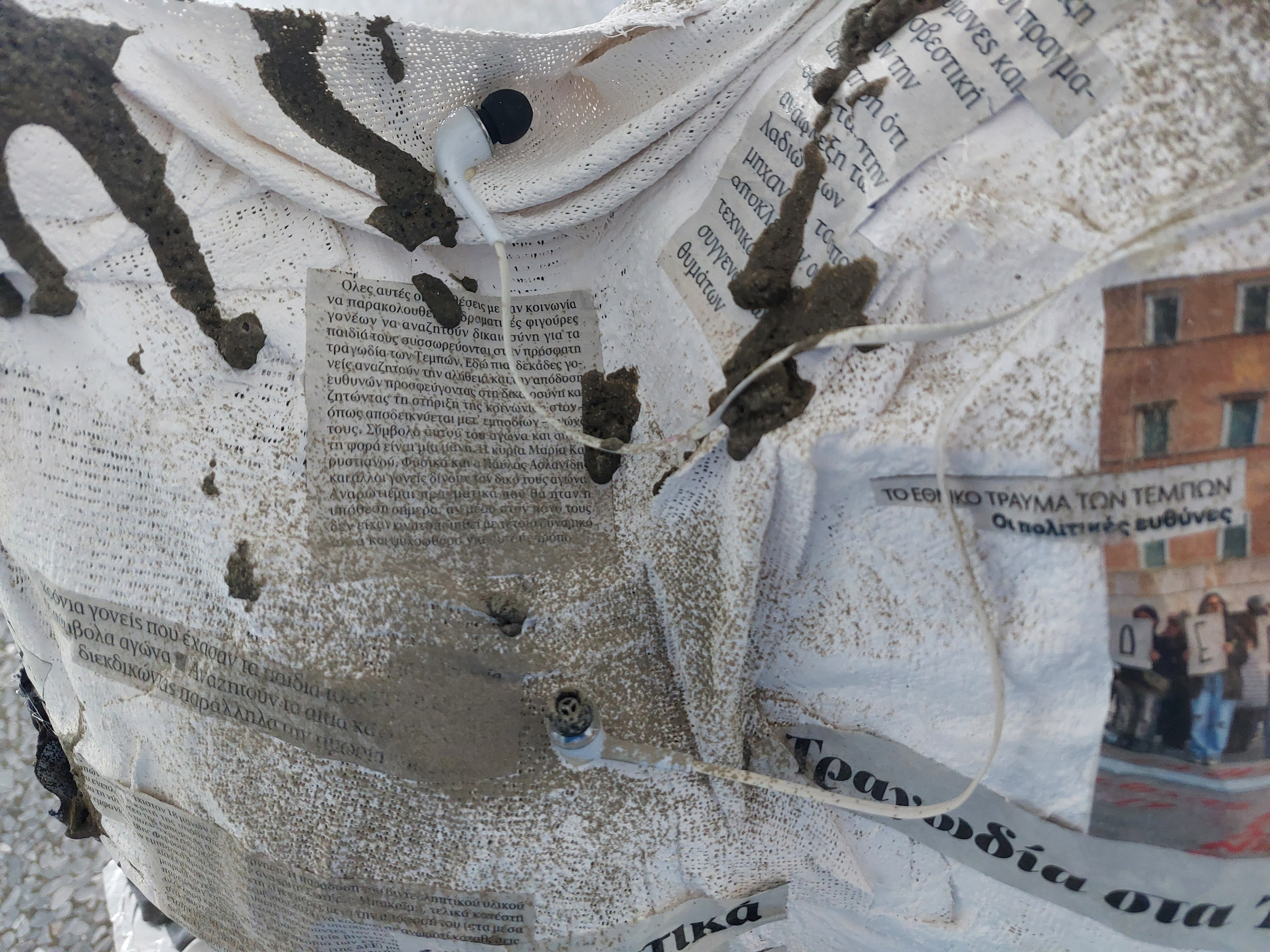
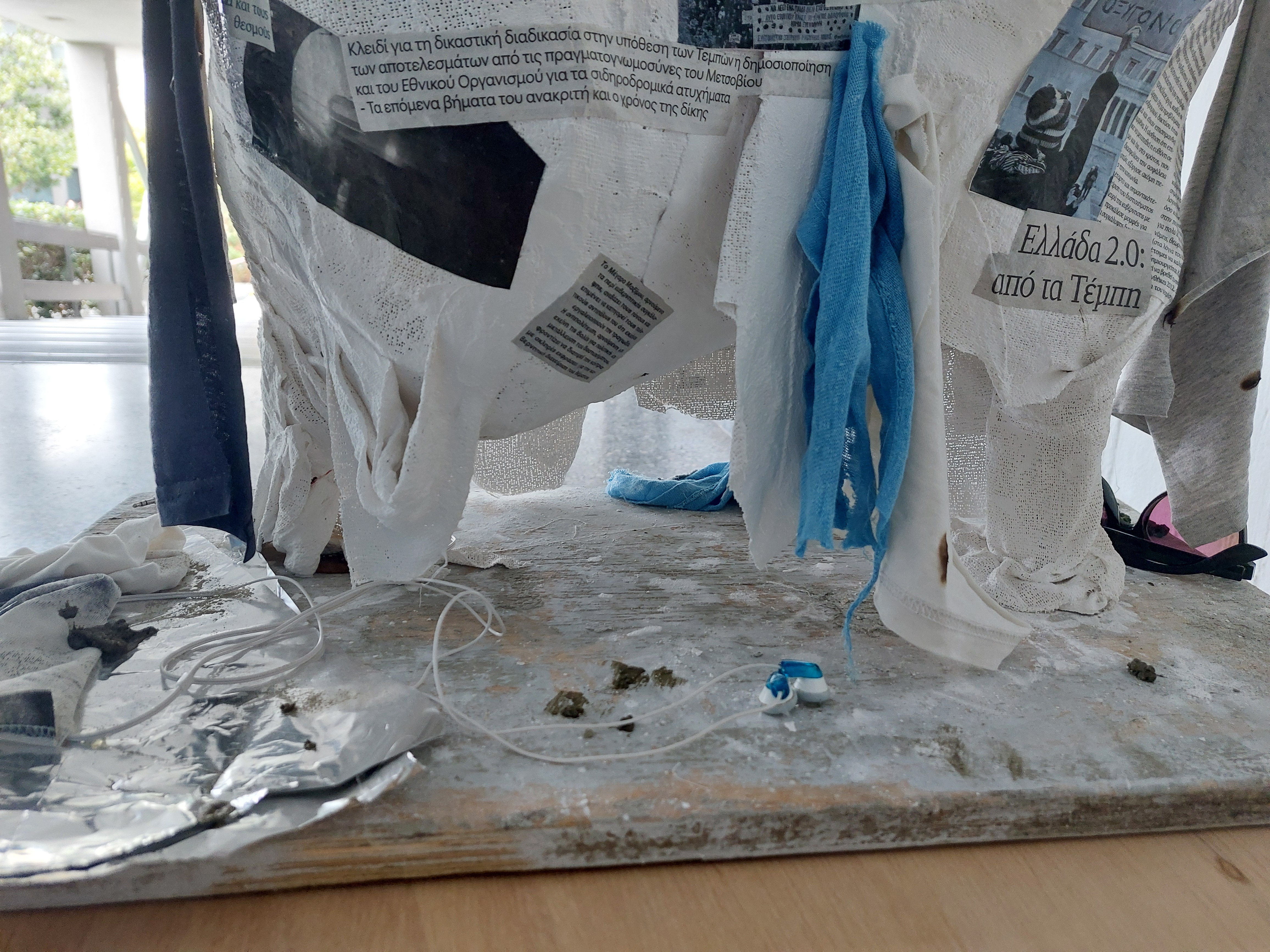
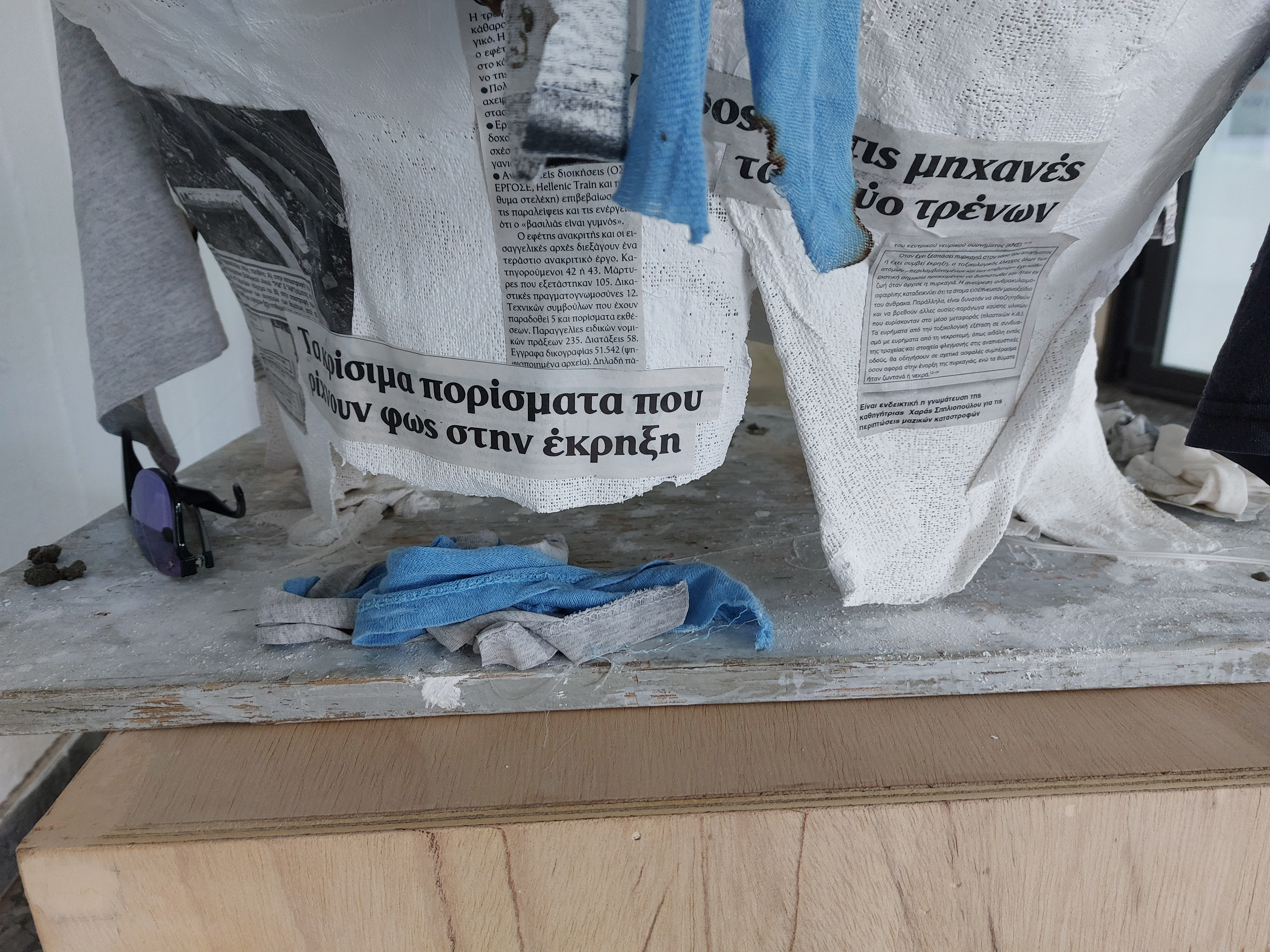
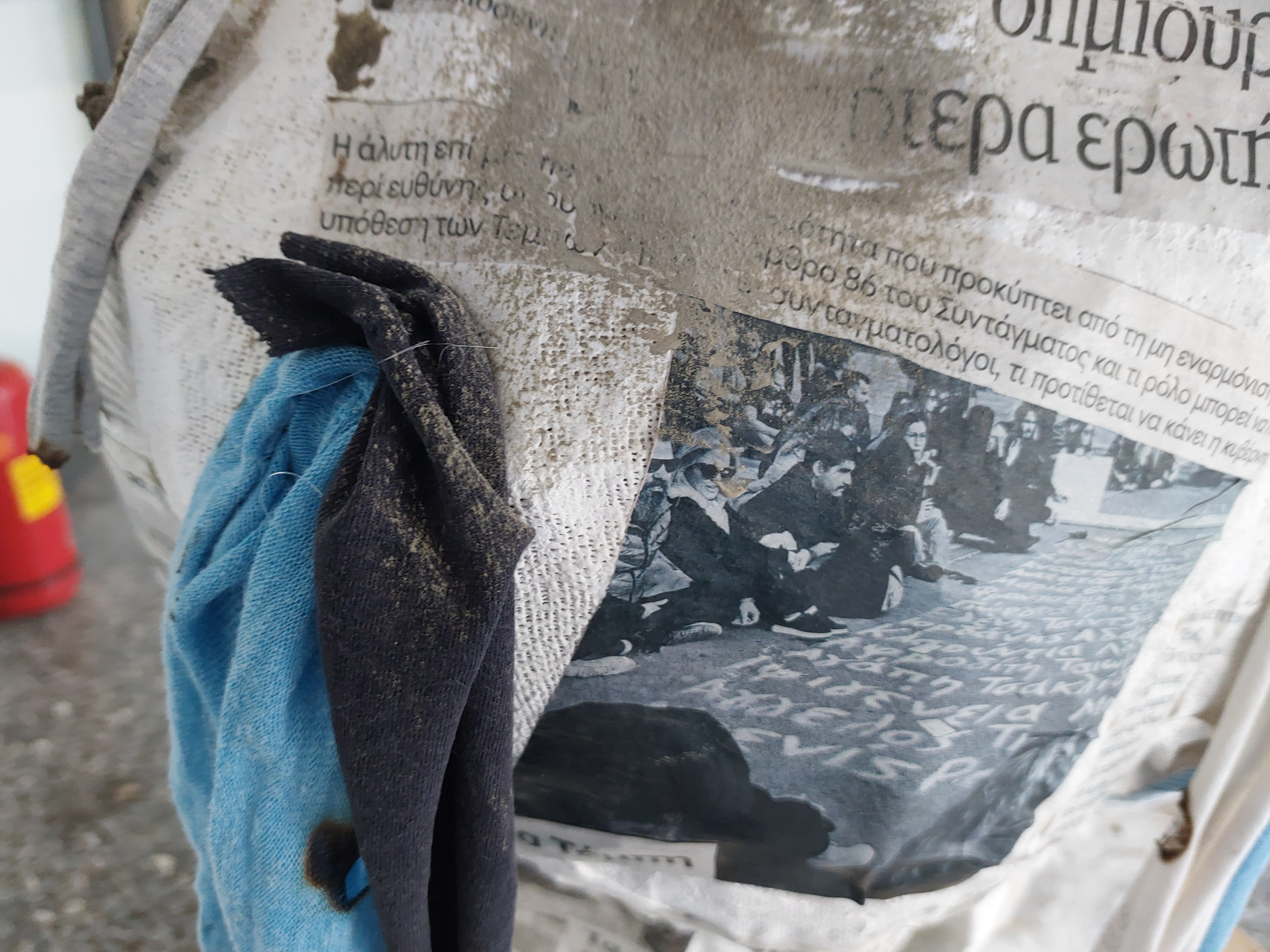
The work submitted was created as a midterm project in the Sculpture II (Prof. Irini Miga) course and is inspired by the principles of the Arte Povera movement, meant to reflect on current sociopolitical issues. I chose to deal with the Tempe train crash, creating my sculpture as a tribute to the 57 lives lost in the collision and as my way of dealing with the tragedy. Taking inspiration from the movement’s core principles, I used found materials relating to the concept, such as gauze, newspaper clippings -57 to be exact, one for each victim- charred fabric scraps and, most importantly, cement.
-
Artist Statement
-
For this project, we were tasked with creating a work based on the core principles of Arte Povera, in a way that would reflect on the current sociopolitical environment. From the moment I heard of the theme I knew instantly what my work would tackle: the tragedy that took place two years ago with the head-on collision of two trains in Tempe, Greece, and the aftermath of it. The following essay is going to describe my complete process of creating this project, from the initial research and conceptualization to the decisions made that led to the final work.
Before taking steps in the materialization of my idea, I first needed to research and learn more about the art movement, to better understand its goals and how to place it in a more modern setting. Besides our in-class lectures on the subject matter and my research online, I found Germano Celant’s “Arte Povera. Notes on a Guerilla War” (1967) extremely helpful to learn more about the central ideas and the philosophy of the pioneers of the movement. Through his writing, I got a deeper understanding of the context in which artists such as Merz, Kounellis or Prini came to make their works, as well as getting further introduced to each of the ‘faces’ of Arte Povera. While doing so, it was Luciano Fabrio and his extensive body of work that attracted my attention, arguably being what influenced my project the most, especially his collection of Italy’s silhouettes. Specifically, it was his “L’Italia d’oro” (Golden Italy), depicting a representation of the country’s map hung upside down, with a noose connecting it to the ceiling, which affected me the most. While this might not be initially visible in my work, it was this paradox that influenced my thinking, the juxtaposition of precious metals being demeaned as they are being hung in front of the audience’s eyes. This sense of subtle, yet loud criticism of the country’s state is what I wanted my work to emulate in the viewer as well, for them to instantly feel what the work is criticizing, without it being explicitly explained to them.
When it then came to my concept and its meaning, I knew from the start I wanted it to tackle the Tempe crash, have it as my small way of honoring those who lost their lives to it. I created it as a tribute, as well as a reminder, that no matter the attempts made, it will not and cannot be forgotten. I wanted my work to reflect the reality of what happened, the lives and evidence lost and burned, the attempted cover up, the way the names and very existence of the people left behind were ridiculed in every way possible. I also wanted it to incorporate what distresses me the most, the fact that many of the people lost were not even in their late twenties. In no way am I attempting to diminish the loss of those older, it is simply that I cannot shake that I share an age with so many of them. That is why I needed to create this work, why I felt it my duty to honor them more. For the people I will unfortunately grow older than, when I never should have.
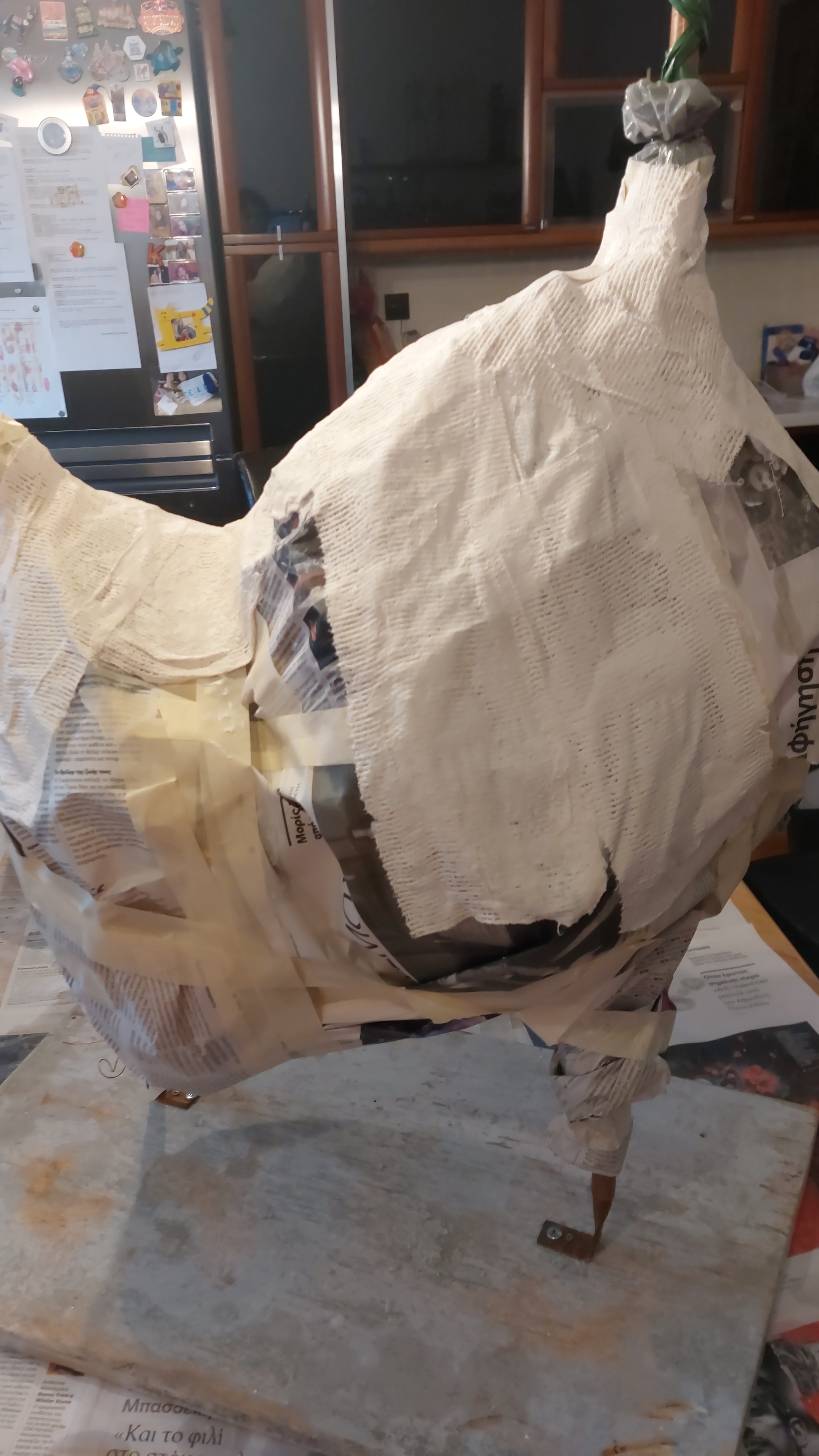
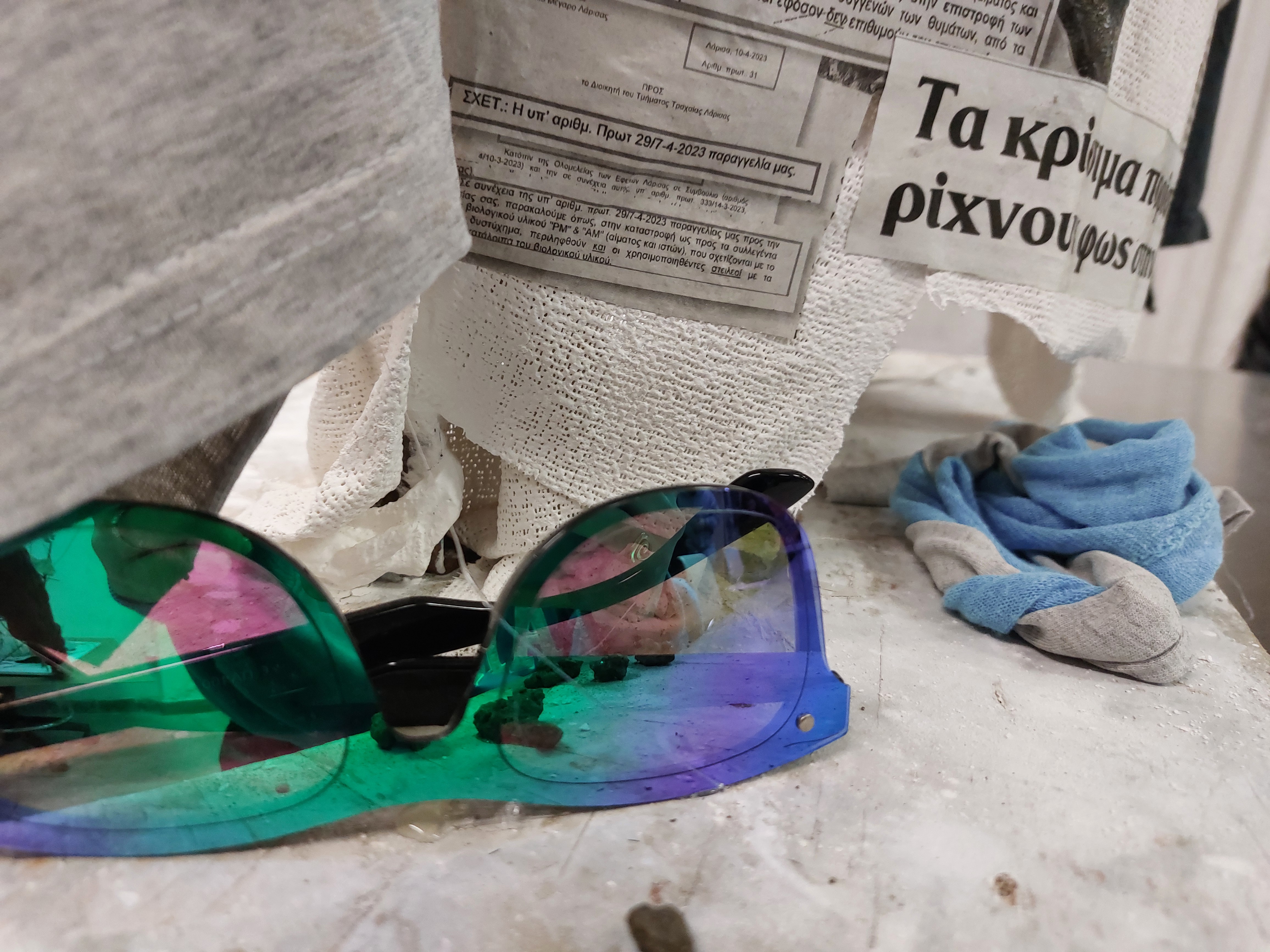
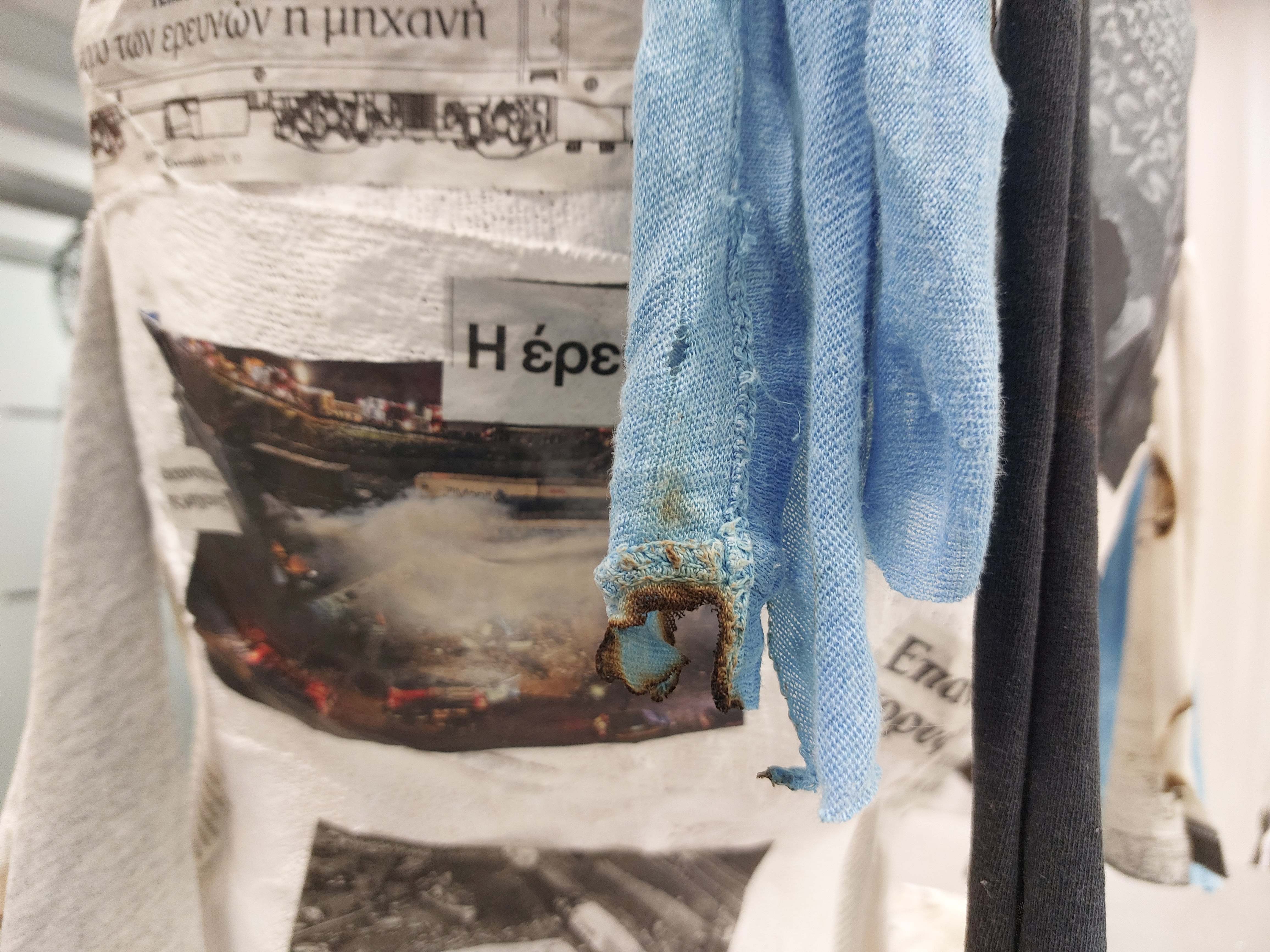
Through this process, I decided on my materials for this project, wanting to rely on ones relevant to the event of the crash. Using a block of wood and copper pipes, I created the base for my structure, leaving a small part of the latter visible in the final work, as to resemble the metal parts of the train. I then used a plethora of materials, ranging from trash bags to even cement and fabrics. Some had more practical reasonings behind them, such as the plastic bags -not visible in the final work- used to create the initial shape of the project, while others had symbolic use as well, such as the plaster gauze layered over them, used for most of the structure. It aided me greatly in the creation of the form, while also being reminiscent of the many survivors, heavily injured by the collision. On it, there is a collage-like layer of newspapers, consisting of articles written about Tempe, 57 titles, excerpts and photographs: one for each of the victims. Pieces of torn up and charred fabrics were then used in the empty spaces as well as on top of the wooden base, on which I also placed pieces of aluminum foil, similar in its simplest form to the crash site and the materials used by the first responders. Moreover, I used found objects: two pairs of earbuds and an old pair of sunglasses. This was my way of visualizing the young students lost; objects, most probably in the bags of many of them, as well as having personal significance to me. Music is and always has been very strong in my life, and I never travel without it. Thus, it felt appropriate to add that small part of me in the sculpture, having it be my tribute to them. Finally, the last material I added was the most significant too, the one I was certain I would use from the beginning, the cement. Used to cover up the crash site is the same material that adorns the top portion of the sculpture, placed there so that there would be no doubts regarding its purpose or its meaning.
All in all, I am satisfied with the overall result of my project and believe that it fulfils all the criteria in the brief given. I am more satisfied though that through this project I feel I succeeded in my original goal, to honor and remember those who lost their lives two years ago.
-
Keywords
-
arte povera
-
sculpture
-
thought-provoking
-
Subject
-
Visual Arts
-
Date Available
-
May 22-23, 2025
-
Type
-
sculpture
-
Course
-
AR 3108 Sculpture II
-
Instructor
-
Miga, Irini
-
Session
-
Visual Arts Exhibition
-
Location
-
Arts Center Gallery
-
Event
-
Year 2025 | 9th Annual Student Research and Creative Arts Symposium