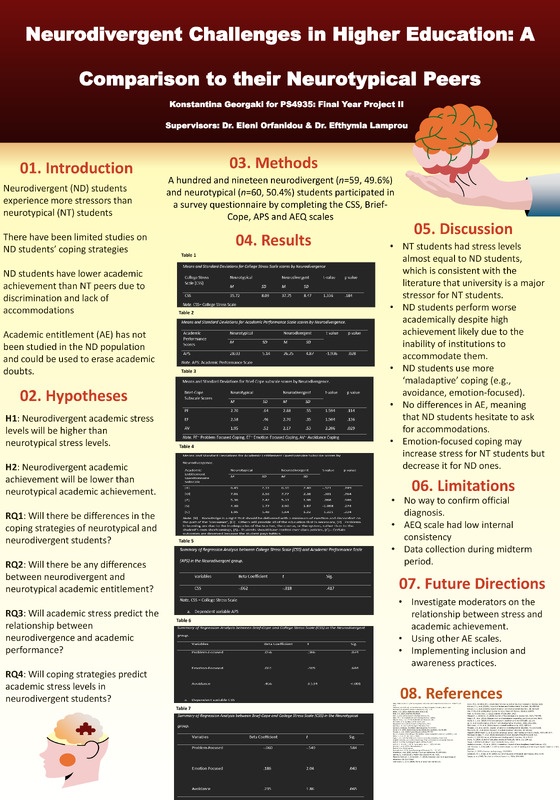
This research compared the stress levels, academic achievement, coping strategies and academic entitlement of neurodivergent and neurotypical students. Whether academic stress predicts academic achievement and whether coping strategies predict stress in the neurodivergent population were investigated. Neurodivergent (n=59, 49.6%) and neurotypical (n=60, 50.4%) students completed the CSS, Brief-Cope, APS and AEQ scales. Results revealed significant differences in academic performance and coping, but not in academic stress and entitlement. Academic stress did not predict achievement. Avoidance coping predicted stress for both groups and emotion-focused coping predicted stress in neurotypical students. Findings have major implications on how students combat stressors.
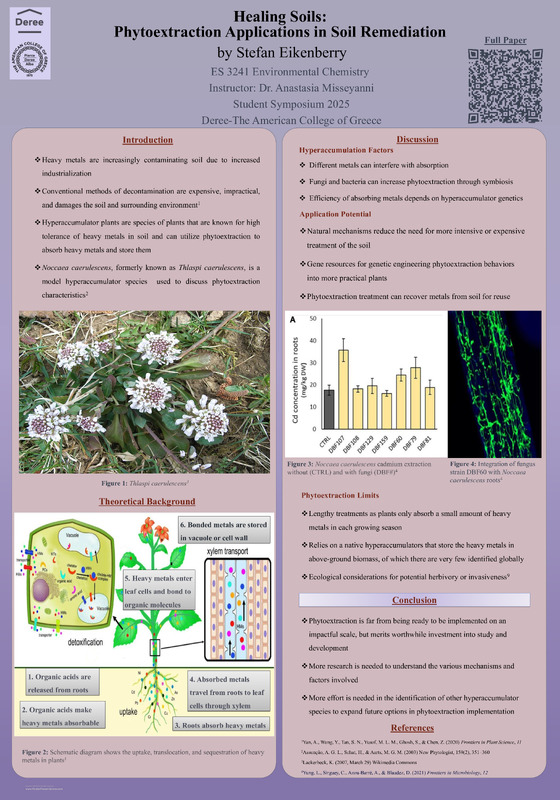
This paper examines phytoextraction as a biotechnology tool to remove heavy metals from soil utilizing hyperaccumulator plants. Emphasis is put on utilizing Thlaspi caerulescens as model for researching hyperaccumulation mechanisms while elaborating on the factors that may influence phytoextraction performance. Further discussion focuses on potential applications for phytoextraction to remove heavy metals from soil, benefits and limits of said applications, and considerations for phytoextraction implementation. The extent of influence of several factors ranging from soil pH to genetics is critically examined, highlighting the uncertainty in understanding the phytoextraction process and the necessity of supporting further research.
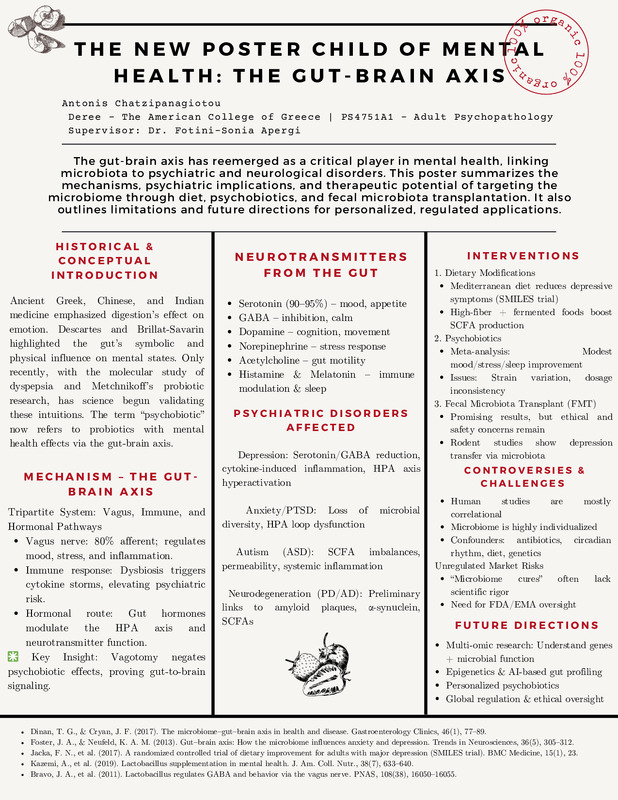
Recently, Picture 8, Picturethe Gut-Brain AxisEnd Match, Picture has found Picture 6, PictureaEnd Match, Picture resurging interest in the literature, in treating mental and neurological disorders. In this review, a short introduction will be made on the history of the gut microbiome. Thereafter, the evidence in support of this method will be explored, while also considering the insufficiently, as of yet explored areas and some potential dangers. Finally, some future directions will be discussed, while also presenting a general verdict, based on the now available research.
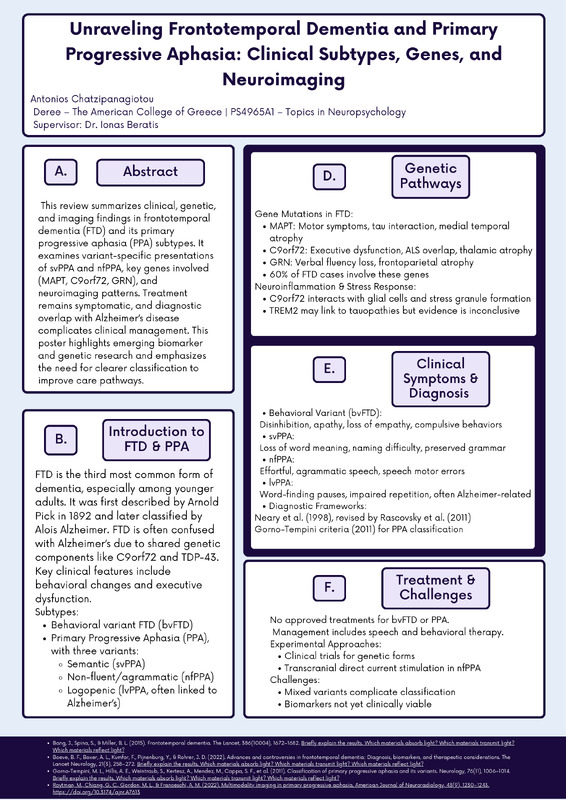
The present review reports on Frontotemporal Dementia and the variants of Primary Progressive Aphasia, semantic variant primary progressive aphasia” (svPPA) and “non-fluent agrammatic primary progressive aphasia” (nfPPA/nfvPPA). In the introduction, its variant of dementia is first introduced and general information is given. The next section provides the findings of studies on the epidemiology of dementia in general as there are no such reports specifically for FTD and subsequent variants as extensive as those for dementia in general. In the section about treatment only some indicative supportive interventions are cited, as there is no medication for combatting FTD. The remaining sections focus on its variant separately, reviewing findings on epidemiology, disease onset and survivability, clinical presentation and diagnostic criteria, possible dub-variants, gene mutations and brain imaging studies.
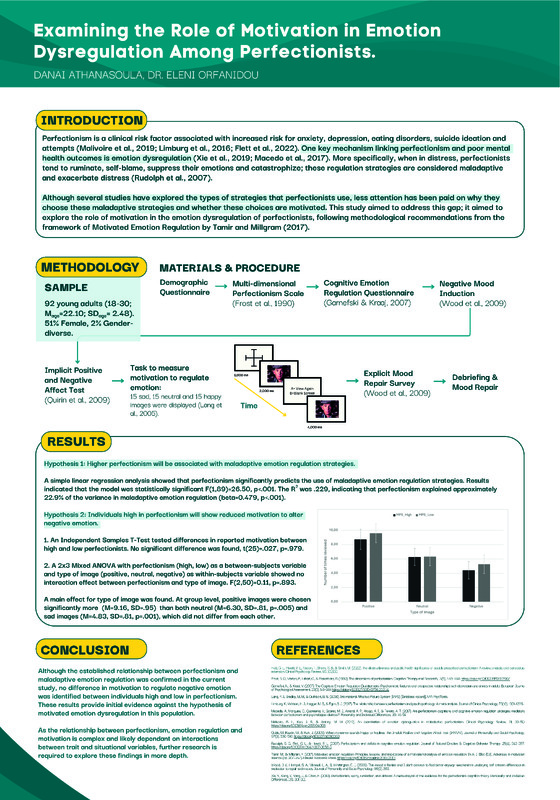
Perfectionism has been associated with the use of maladaptive emotion regulation strategies. This research aimed to explore the role of motivation to regulate emotion in the aforementioned relationship.
Participants completed measures of perfectionism and emotion regulation, followed by a mood induction task and a stimulus selection task.
Results showed that perfectionism predicted the use of maladaptive emotion regulation strategies. However, participants overall showed motivation to repair their mood, selecting positive images more often than sad or neutral ones. No significant interaction between perfectionism and image type was found, providing evidence against the notion that perfectionists intentionally maintain negative mood.
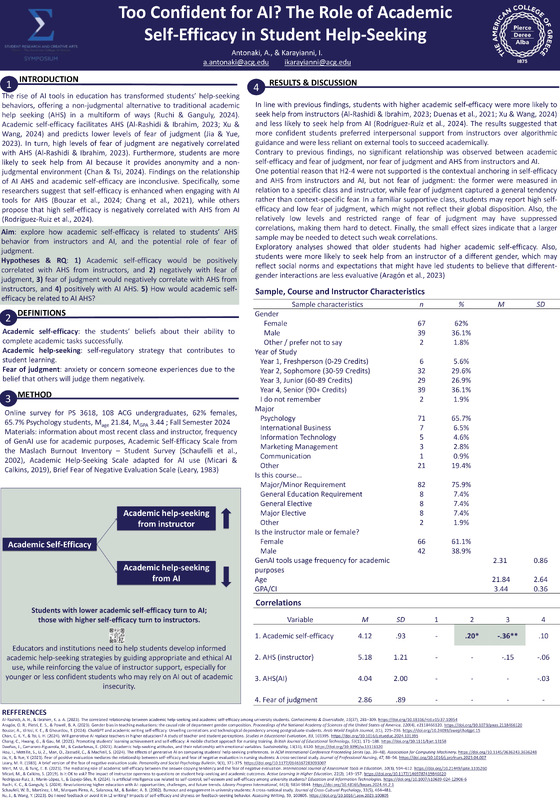
The rise of AI tools has transformed academic help-seeking (AHS), offering non-judgmental alternatives to traditional academic support. While academic self-efficacy facilitates AHS, its relationship with AI use is unclear. I examined how self-efficacy relates to AHS from instructors and AI, and the role of fear of judgment. A survey of 108 undergraduates revealed that self-efficacy encouraged instructor AHS but discouraged AI AHS. Students preferred seeking help from instructors of a different gender, and age positively correlated with self-efficacy. Fear of judgment was not related to any outcomes. Findings highlight the need to examine AI integration to complement traditional academic support.
This study examined how language, proficiency, and cognitive load impact emotionality during traumatic autobiographical memory (AM) retrieval. Greek native speakers (N=107) recalled a traumatic AM in their first language (L1), second language (L2; English), or L1 under cognitive demanding conditions (simple visuospatial task), while undergoing physiological EDA assessment. Notably, our findings showed that lower L2 proficiency – not L2 alone – reduced emotional intensity. Additionally, cognitive load during L1 recall significantly lowered emotionality, supporting resource-dependent emotional processing models. These findings reveal the interplay between proficiency and cognitive demands in shaping bilingual emotional processing, with implications for clinical and therapeutic settings.
This paper examined the attitudes of students and faculty towards academic uses of AI Chatbots, as well as students’ awareness of academic integrity principles surrounding AI usage and the ability of both faculty and AI detection software to distinguish between human and AI-written text. Findings include a positive outlook towards AI chatbot usage in both faculty and students, as well as approximately half of the student participants being able to respond correctly when asked about appropriate and inappropriate uses of AI. Additionally, neither AI detection software nor faculty members were able to consistently differentiate between AI-written and human-written text.
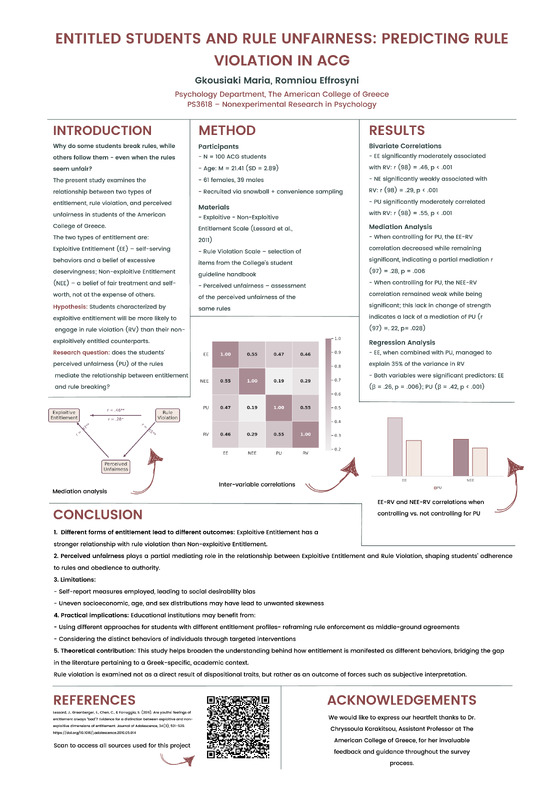
This study examined the relationship between psychological entitlement and academic rule violation among college students, differentiating between exploitive and non-exploitive entitlement. A total of 100 undergraduates participated via an online survey. The results indicated that exploitive entitlement was positively associated with rule violation, a relationship which is partially mediated by how fair the rules are perceived to be. Conversely, non-exploitive entitlement was linked to a significantly lower frequency of guideline violations. These findings provide insight into understanding the psychological mechanisms contributing to deviant behavior in an academic context, possibly applicable in policy development and enforcement.
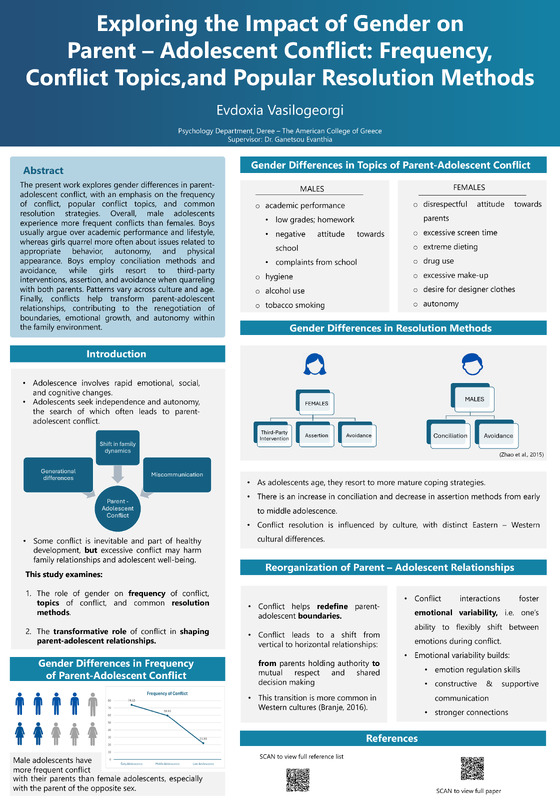
The present work explores gender differences in parent-adolescent conflict, with emphasis on frequency of conflict, popular conflict topics, and common resolution strategies. Overall, male adolescents experience more frequent conflicts than females. Boys usually argue over academic performance and lifestyle, whereas girls tend to quarrel more about issues concerning their behavior, autonomy and appearance. Boys employ conciliation methods and avoidance, while girls resort to third-party interventions, assertion, and avoidance when quarrelling with both parents. Patterns vary across culture and age. Finally, conflicts help transform parent-adolescent relationships, contributing to renegotiation of boundaries, emotional growth and autonomy within a supportive family dynamic.