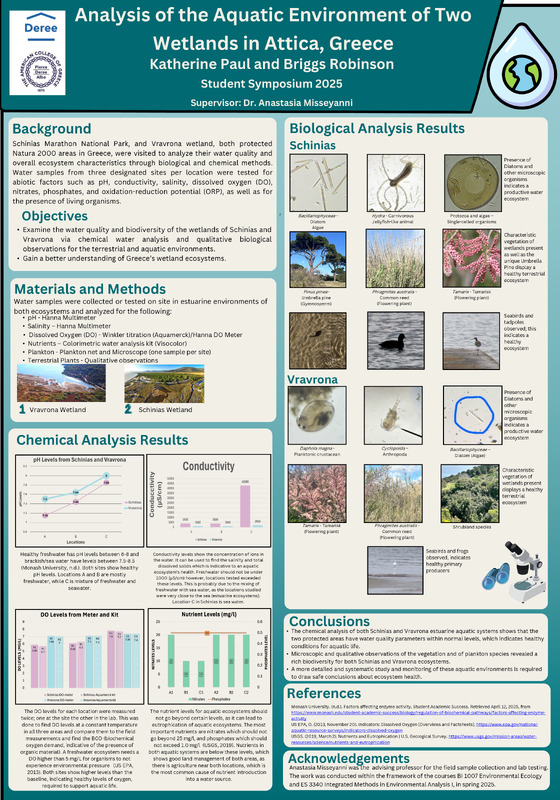
Schinias National Park, and Vravrona wetland, both protected Natura 2000 areas in Greece, were visited to analyze their water quality and overall ecosystem characteristics through biological and chemical methods. Water samples from three designated sites per location were tested for pH, conductivity, salinity, dissolved oxygen (DO), nitrates, phosphates, and oxidation-reduction potential (ORP). The results showed higher salinity and conductivity near the sea as expected. Microscopic observations of water samples revealed rich levels of plankton, and field observations showed characteristic vegetation and wildlife of a coastal ecosystem and wetland. The results confirm Schinias and Vravrona have rich biodiversity and a healthy aquatic ecosystem, highlighting the importance of their conservation.
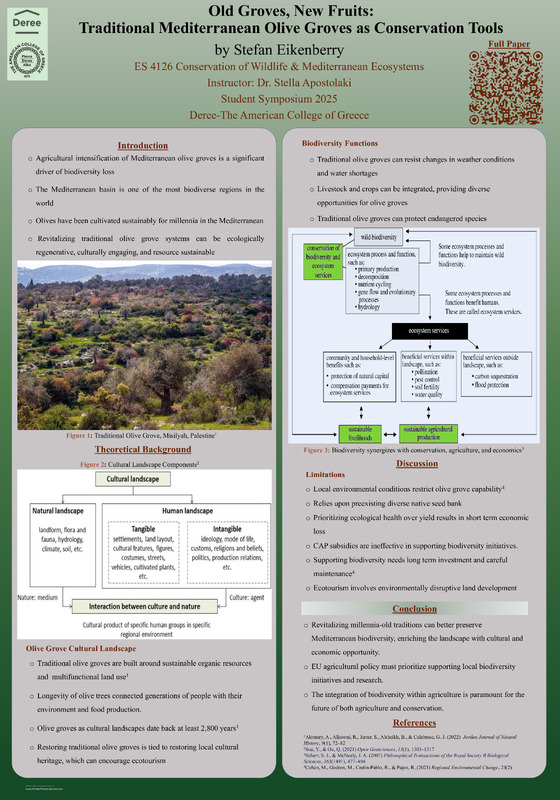
This paper presents an overview of Mediterranean olive cultivation history, how it transitioned to the modern model, and the associated environmental costs that came with this transition. The work also examines how the olive tree formed cultural landscapes through its growth characteristics and its importance as an interface with local ecosystems and rural communities. Emphasis is placed upon the ecological and cultural services provided through this traditional agroecosystem model, the potential for reintegrating the olive tree as a conservation tool in the modern day in tandem with ecotourism, and constraints that can be overcome through EU policy reform.
Background: Krill oil is used as a food supplement for its high concentration in omega-3 fatty acids. Antarctic krill harvesting is subject to sustainable fisheries and Superba (the main company which is responsible for krill oil production) follows strict risk assessment protocols to ensure green practices.
Objectives: The increased demand of krill oil production has created the need to examine a) the health benefits of its use as food supplement b) the sustainability aspects of Antarctic krill fisheries.
Methods: This was achieved via a systematic literature review of available publications concerned with among others: krill oil, Antarctic krill, reduction fisheries, health benefits.
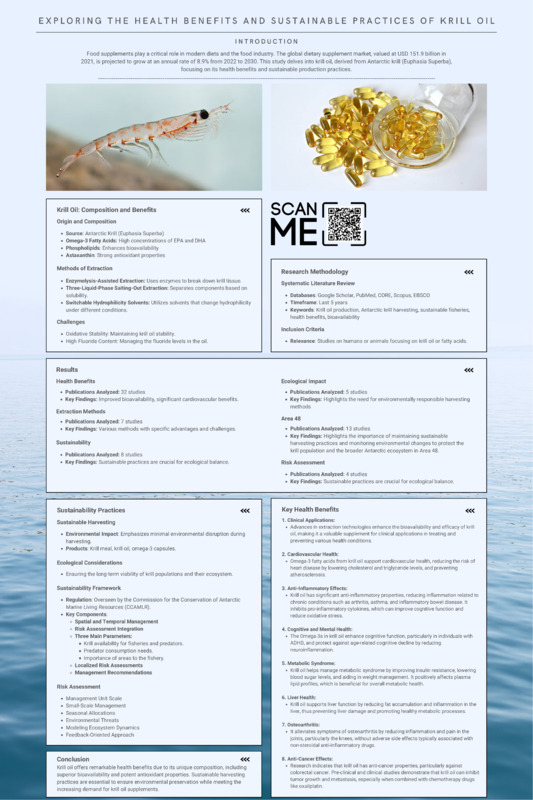
Results: The literature search resulted in 203 publications that could be used in this report. Overall, more than half of them discuss the health benefits of krill oil and its bioavailability. Krill oil proved to have numerous health benefits including anti-inflammatory action and reduction of cholesterol levels in the blood. The health benefits of this supplement have contributed to the increased demand of its production and distribution. Little information was obtained for the risk assessment, and management of krill fisheries in the Antarctic. The fisheries responsible for the krill harvesting (Superba Area 48) follow practices outlined by the Convention for the Conservation of Antarctic Marine Living Resources (CCAMLR).
Conclusions: Overall, krill oil production increases over the years and it is crucial for Area 48 to adopt more sustainable practices to avoid overfishing and destruction of the food chain in the Antarctic, since krill fish is an important feed of predators there.