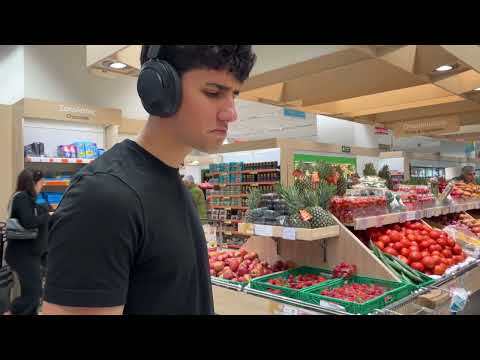
In a world full of anxiety-inducing events and instability people always tend to seek for some kind of relief, certainty and maybe even a guarantee that uncontrollable factors can be controlled or to some extent predicted. One of such ‘visibility of control’ practice for many centuries is divination that uses tarot cards as a medium. Since the beginning of the course, I started seeing how many biases can play a role in making scientific experiment invalid, unreliable and far from reality. In my experiment with in-person reading and questionnaire I registered the presence of several psychological effects despite sample’s size.
Add Glitter is a photographic adaptation inspired by the cabinet of curiosities, examining the biopolitical being of female athletes in aesthetic sports. The project interrogates how athlete bodies are degraded to machines to serve national reputation and power dynamics. It highlights the tension between the spectral manufactured, hyper-feminine ideal, and the biological realities of a female body, such as menstruation, injury and body fat. By archiving disciplinary artifacts used daily by female athletes, the work demonstrates how hyper-femininity creates an unhuman automaton state of being for female athletes. Ultimately, the project seeks to reclaim agency through memory, shifting the athlete form a docile machine back into its human form.
The Project is a felt board which has pinned on its surface various conspiracy theories structured in a way that from the bottom left to the top right of the board the theories presented become increasingly extreme. All these theories are linked together by red string based on their supposed connection with one another, the imagery being like the stereotypical portrayal of conspiracists. In the middle of the board there is a drawing of a concerned conspiracist covering his face with his hands, with his inclusion meaning to symbolize the feelings of paranoia, overstimulation and anxiety which comes from participating in conspiracy culture.
This sculpture discusses the theme of technology and our relationship with it. More specifically, how we have become a tool for consumption and the convergence between humans and technology. Furthermore, it criticizes how we have become both the input and the output in our digital age.
“4265” is a creative exploration of digital citizenship through a parallel narrative following two individuals from different generations, separated by 75 years. Presented as both a short film and script, the project contrasts an “analog” and a “digital” citizen navigating the same daily task, highlighting differences in communication, behavior, and perception. Through emotionally engaging scenes, it examines themes such as digital government, cybersecurity, data privacy, and social interaction. By integrating psychological, social, ethical, technological, and business dimensions, the project emphasizes that the true impact of digitalization lies not in tools themselves, but in how they reshape human experience and everyday life.
As political authority is becoming increasingly implicit, so is the individual’s ability to discern its presence. Drawing on Michel Foucault and Antonio Gramsci, the digital diorama of the Panopticon reinterprets this architectural design of behavioral regulation into a contemporary, subtle mode of governance, involving the transmission of authority through implicit mechanisms of surveillance. This project demonstrates how contemporary authority relies on decentralized methods of discipline to induce regulation, conformity and obedience and thereby transform citizens into mechanisms of surveillance as well.
For my creative project for this course, I have selected to create a card game based around the idea of building a sustainable company. The context behind the idea is assessing how corporations can take immediate action towards progressing the sustainable development goals (SDGs), mostly focusing on goals 13, 12, 10, 8 and 7. The aim of the project is for the players to interact with concepts of sustainability and with the SDGs in a fun, interactive and informative manner, and is a way of meaningfully engaging with the material of this course, as well as tackling difficult issues that otherwise might be heavy to discuss through a more serious lens.
My project “Trophy Wall” is a digital drawing alongside a physical sculpture of the main subject. The concept follows queer violence mirroring animal violence, queer bodies as animal bodies as trophies. Queerness often questions the dominant ideas of gender, sexuality, normativity. Animal justice challenges the anthropocentric idea that humans are naturally superior. Both reject the “nature” to justify the hierarchy and exclusion of other subjects. Both queer and animal bodies have been viewed as excessive, dangerous, carriers of disease and targets of violence. The project explores how animal and queer justice is interlinked through their resistance to human supremacy.
This project, Afghan Women Rise, was both a creative project and personal exploration of Afghan women’s rights, dignity, and resilience. As an Afghan woman, I approached this subject, not only as an academic assignment but as a meaningful expression of lived experience, cultural heritage, and hope for change. Through textile art and embroidery, I sought to reflect the struggles and strength of Afghan women while raising awareness about their ongoing fight for equality and freedom Embroidery carries generational and cultural meaning. The winged woman symbolizes freedom, hope, and resilience of Afghan women and the stitching is a metaphor for resilience – each thread representing endurance, patience, and strength often unseen in women’s struggles.
The creative project explores political polarization, through a short, silent film that potrays political rhetoric as a curated performace or tragedy. Based on the "hot" affective condition of politics, we utilized ancient theatre masks, modeled after Facial Electromyography (fEMG) research, to satirize the simplification and exaggeration of political media. The themes of the film visualize mimicry based on Homan et al. (2023) and Fino et al. (2020) findings on "Schadenfreude" and the "Favorite Leader Effect." Through black and white, eerie and sharp editing the film invites the audience to question superficial "masks" of polarization and expose the manifactured nature of media.