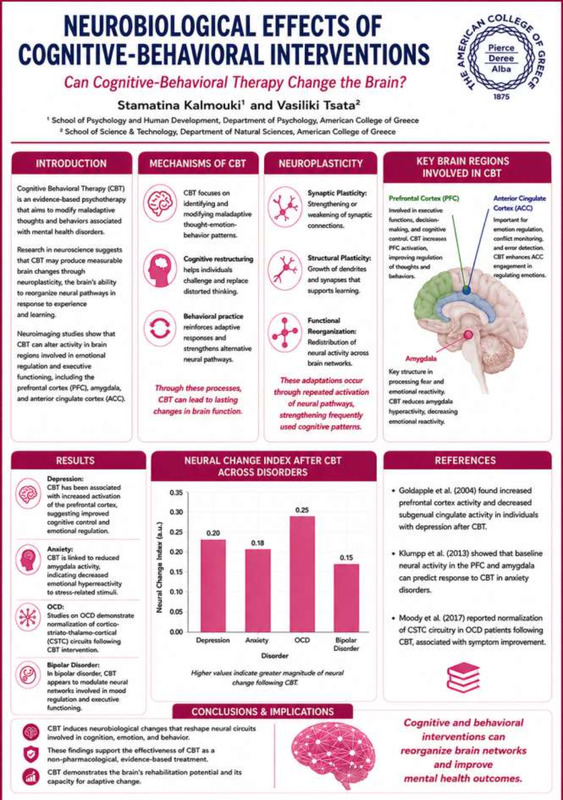
This poster explores the extent to which Cognitive Behavioral Therapy (CBT) can induce measurable neurobiological change through neuroplasticity. By targeting maladaptive thought–emotion–behavior cycles, CBT promotes synaptic and structural plasticity as well as functional brain reorganization. Neuroimaging studies demonstrate alterations in key regions such as the prefrontal cortex, amygdala, and anterior cingulate cortex across disorders including depression, anxiety, and OCD. These findings highlight the mind–brain interaction and support CBT as an effective non-pharmacological intervention.