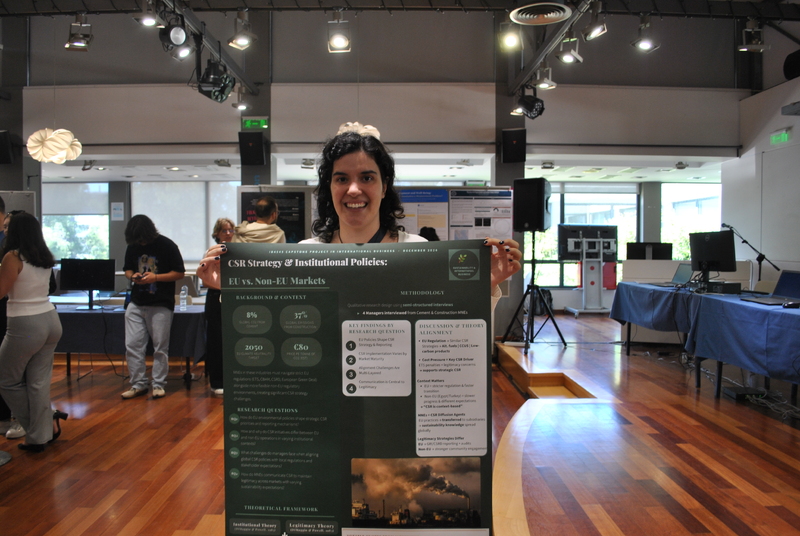
This study examines how Multinational Enterprises (MNEs) adapt Corporate Social Responsibility (CSR) strategies across EU and non-EU markets in the cement and construction industries. Drawing on institutional and legitimacy theory, it uses qualitative data from manager interviews to explore how regulatory pressures shape CSR practices. Findings show that strict EU policies drive structured reporting, transparency, and investment in sustainable technologies, while non-EU markets exhibit more flexible, context-specific CSR approaches due to weaker regulations and lower stakeholder awareness. MNEs balance global consistency with local adaptation through knowledge transfer and targeted communication, while facing challenges in aligning diverse institutional and stakeholder expectations.
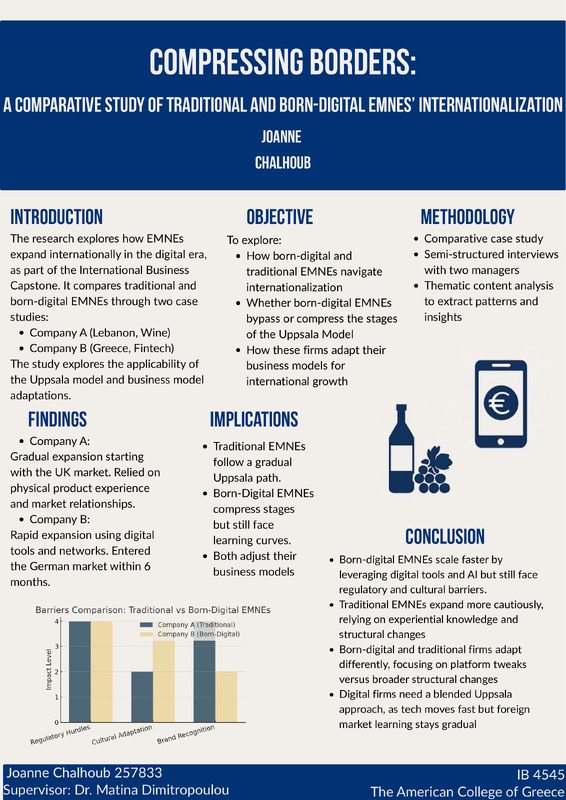
This research presents a comparative analysis between the traditional internationalization (Uppsala Model) and the “born-digital” model. By employing secondary and empirical research, I highlight the areas in which those two approaches of internationalization diverge and how this divergence affects their international operations. Considering the importance of digitalization in businesses, this research contributes to the existing IB theory by evaluating how digitalization transforms the internationalization process. Another area of contribution is the contextualization of this research, as my sample focuses on EMNEs (a Greek high-tech and a Lebanese wine firm); despite their growing opportunities in international trade, EMNEs still face challenges and in leveraging digital platforms and navigating institutional barriers.