This sculpture discusses the theme of technology and our relationship with it. More specifically, how we have become a tool for consumption and the convergence between humans and technology. Furthermore, it criticizes how we have become both the input and the output in our digital age.
My project “Trophy Wall” is a digital drawing alongside a physical sculpture of the main subject. The concept follows queer violence mirroring animal violence, queer bodies as animal bodies as trophies. Queerness often questions the dominant ideas of gender, sexuality, normativity. Animal justice challenges the anthropocentric idea that humans are naturally superior. Both reject the “nature” to justify the hierarchy and exclusion of other subjects. Both queer and animal bodies have been viewed as excessive, dangerous, carriers of disease and targets of violence. The project explores how animal and queer justice is interlinked through their resistance to human supremacy.
To Be Seen is To Be, is a sculptural piece that draws from the potent imagery of the cave-tomb of Sophocles’ Antigone, but also from Athol Fugard’s The Island, and Achille Mbembe’s Necropolitics and aims to explore how systematic state violence renders certain lives invisible. The sculpture takes the form of a cave with its entrance barricaded with stones and wire, a direct connection to Antigone’s tomb but reimagined with contemporary elements, and examines themes of civic erasure, resistance, and social death in the contemporary world.
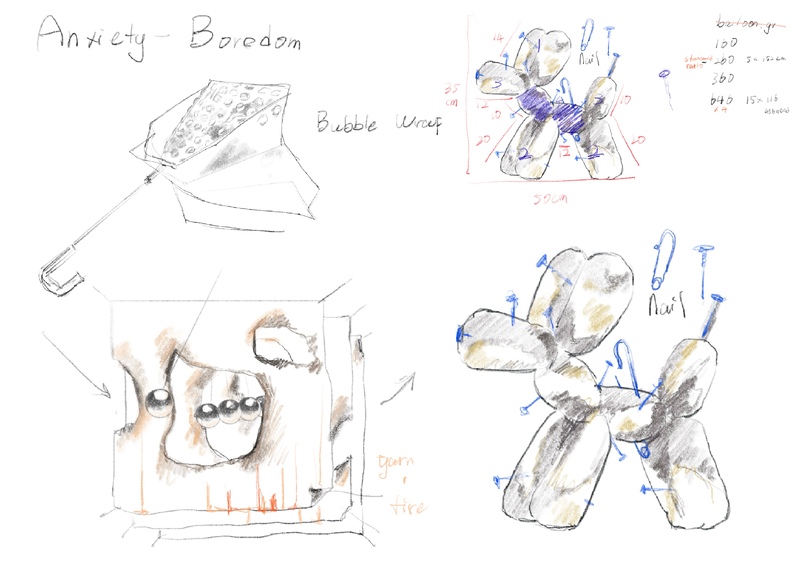
The Balloon explores the emotional opposition between anxiety and calmness through a soft sculpture composed of denim, plaster bandage, and cement. Inspired by the fragility of balloons, this piece reimagines the playful form as a metaphor for emotional vulnerability. The use of contrasting materials of soft fabrics, juxtaposed with the rigidity of cement, embodies the tension between different inner states. By combining unrelated textures and forms, the sculpture presents a unified yet conflicted object, reflecting the unpredictable, transient nature of emotional states.
What should you wear to go sailing? In this installation, I suggest a new uniform
for sailing by presenting a series of outerwear, crafted out of sails and other
materials sourced from “Alter Ego”, my grandfather’s sailing yacht. Inspired by the
mise-en-scène of a sailboat, the work appears as a series of hybrids between
space, sculpture and garment that negotiate form, materiality, utility, and status.
What kind of self is stitched into these materials?
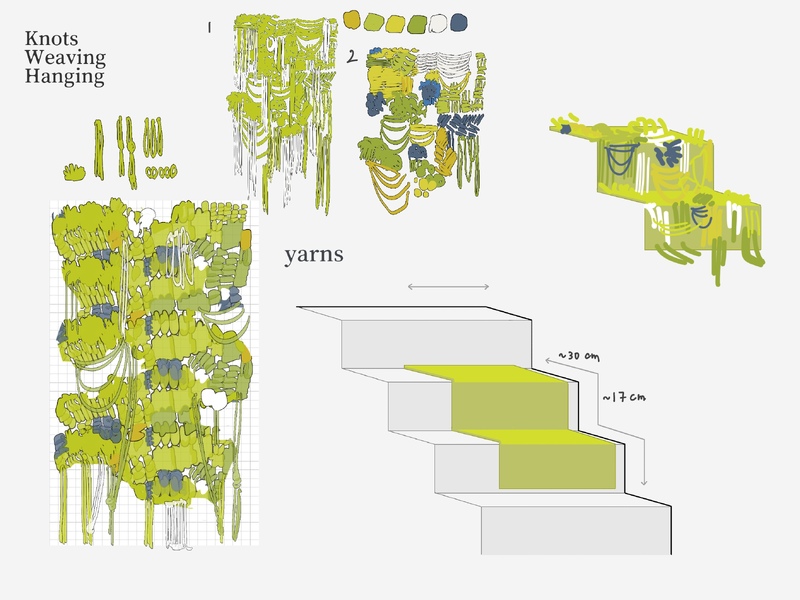
The sculpture Moss is a soft sculpture carpet which weaved with yarns to mimic the feature of nature. The intention of creating the Moss Carpet is to interact within the natural environment, meanwhile attach to the physical surroundings. The carpet is weaved with various yarns, in differing color and texture, which combined together presenting the organic form of moss and natural fibers. The sculpture represents the combination of the tradition technique in weaving and the fragility of nature, while conveying the feminine quality associated with the fabric sculpture. Psychologically, the work evokes a sense of curiosity and intimacy. The nature quality of the softness and warmth in yarn invites engagements mentally, makes the viewer want to touch and feel the piece.
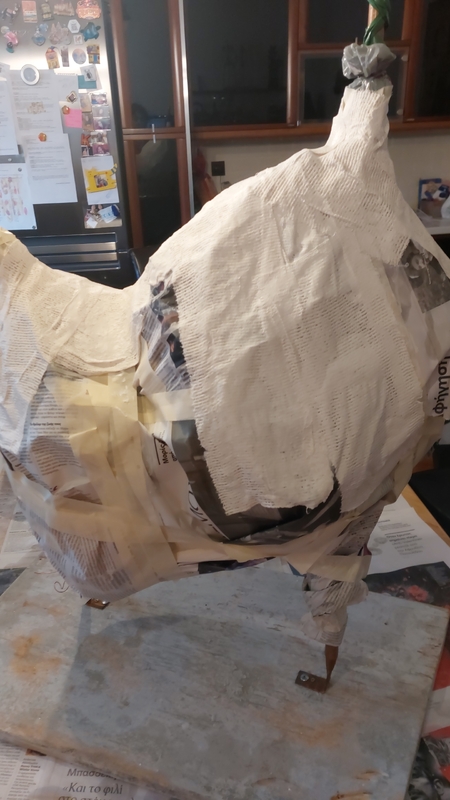
The work submitted was created as a midterm project in the Sculpture II (Prof. Irini Miga) course and is inspired by the principles of the Arte Povera movement, meant to reflect on current sociopolitical issues. I chose to deal with the Tempe train crash, creating my sculpture as a tribute to the 57 lives lost in the collision and as my way of dealing with the tragedy. Taking inspiration from the movement’s core principles, I used found materials relating to the concept, such as gauze, newspaper clippings -57 to be exact, one for each victim- charred fabric scraps and, most importantly, cement.
I reimagined the Snow White fairytale as a sculpture that continues the story after its end. Inheriting the magic mirror, Snow White tries to destroy it to prevent future harm, unaware that she’s releasing the dark force within. This entity offers a poisoned apple, symbolizing society’s toxic beauty standards. The mirror once drove her stepmother’s obsession with beauty, and even when shattered, its ideals persist. The piece critiques how women still feel pressured to conform—through makeup, dieting, or surgery—despite recognizing these standards as harmful. Though the mirror is broken, the allure of the “perfect” image continues to tempt us.
We molded a modern version of Plato’s allegory of the cave out of clay. The sculpture demonstrates that each person’s brain represents a cave that they ought to escape from in order to find the truth and not rely on misinformation. The sculpture shows a classroom, whereas the wooden hand that is outside of the brain represents the main fields that influence one’s character: education, religion and politics. Strings hanging from the hand represent different types of information passed on the students and are colored blue (liberal) and red (conservative) to focus on the political scene in the United States.
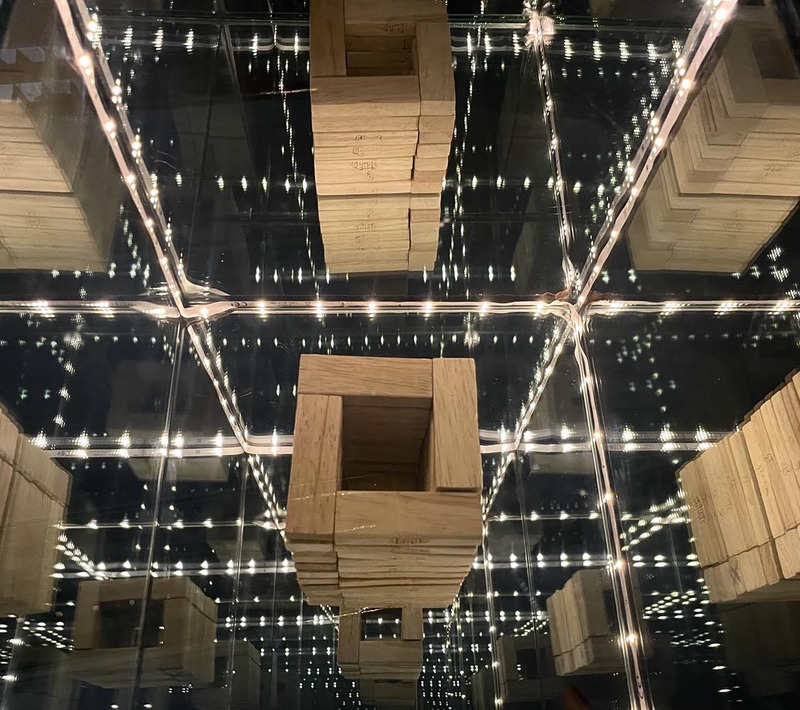
In this work, I tried to work around the basic notions of Minimalism, getting inspired by artists such as Sol LeWitt, Dan Flavin and Robert Morris. Thinking about the basic shape of minimalism, the cube, I created a cube container that inside the viewer will find a second smaller wooden cube.
What is interesting here is that my main cube is made from reflective glass which means that the smaller one inside is infinitively reflected, enhancing my attempt to highlight the most fundamental shape of minimalism.