Items
Tag
Biomedical Sciences
-
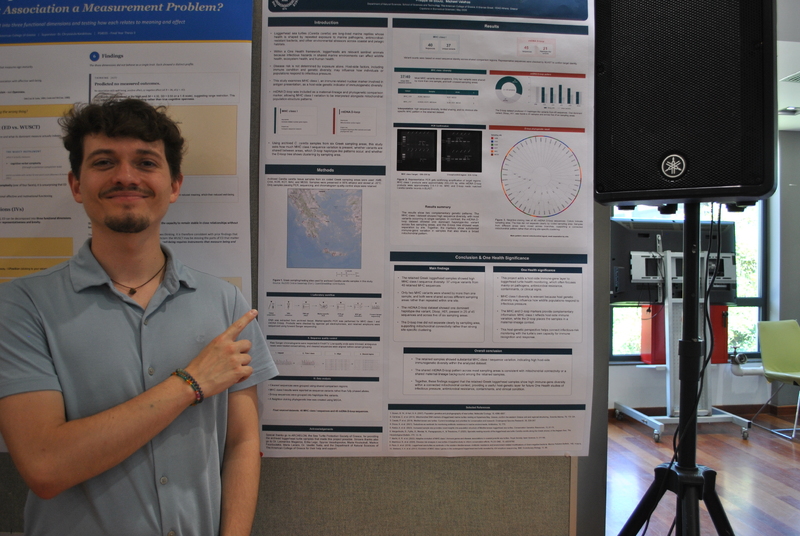 MHC Diversity as a Predictor of Population Fitness to Infectious Challenges and mtDNA D-Loop Phylogenetic Patterns in Loggerhead Sea Turtles (Caretta Caretta)Loggerhead sea turtles (Caretta caretta) act as sentinels at the wildlife–human interface, carrying antimicrobial-resistant and zoonotic pathogens with direct relevance to One Health. Genetic variation is examined across six nesting areas in Greece using 51 archived tissue samples. Two genetic markers are analysed: MHC genes, which govern immune response and reflect disease resilience, and mitochondrial DNA (D-loop), which reveals evolutionary relationships. Through DNA extraction, PCR, gel electrophoresis, sequencing, and phylogenetic analysis, the project compares allelic diversity and phylogenetic structure across sites, with the aim of understanding population connectivity and isolation among Greek loggerhead nesting populations.
-
-
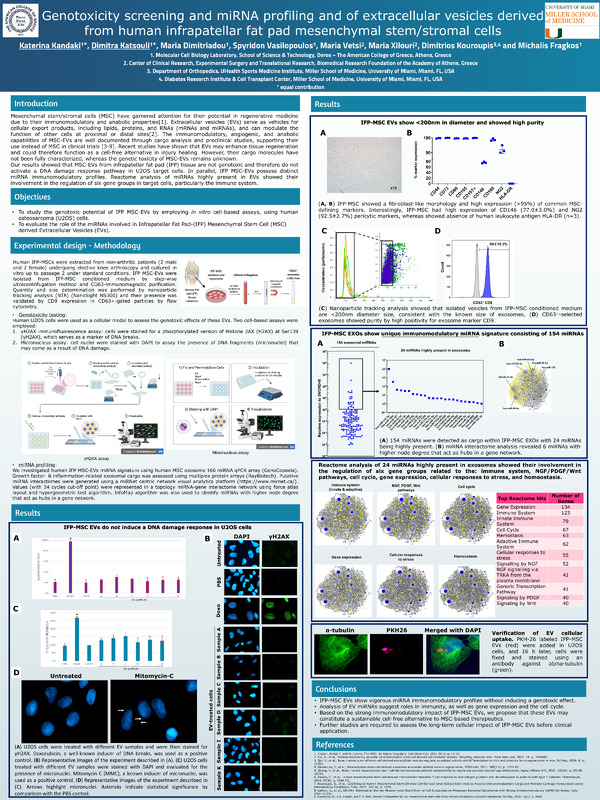 Genotoxicity screening and miRNA profiling of extracellular vesicles derived from human infrapatellar fat pad mesenchymal stem/stromal cells"miRNA profiling and genotoxicity screening of extracellular vesicles derived from human infrapatellar fat pad mesenchymal stem/stromal cells 1. Molecular Cell Biology Laboratory, School of Science & Technology, Deree – The American College of Greece, Athens, Greece 2. Center of Clinical Research, Experimental Surgery and Translational Research, Biomedical Research Foundation of the Academy of Athens, Greece 3. Department of Orthopedics, UHealth Sports Medicine Institute, Miller School of Medicine, University of Miami, Miami, FL, USA 4. Diabetes Research Institute & Cell Transplant Center, Miller School of Medicine, University of Miami, Miami, FL, USA * equal contribution Introduction: Mesenchymal stem/stromal cells (MSC) have garnered attention for their potential in regenerative medicine due to their immunomodulatory and anabolic properties[1]. Extracellular vesicles (EVs) serve as vehicles for cellular export products, including lipids, proteins, and RNAs (mRNAs and miRNAs), and can modulate the function of other cells at proximal or distal sites[2]. The immunomodulatory, angiogenic, and anabolic capabilities of MSC-EVs are well documented through cargo analysis and preclinical studies, supporting their use instead of MSC in clinical trials [3-9]. Recent studies have shown that EVs may enhance tissue regeneration and could therefore function as a cell-free alternative in injury healing. However, their cargo molecules have not been fully characterized, whereas the genetic toxicity of MSC-EVs remains unknown. Methods: In this study, human MSC-EVs originating from infrapatellar fat pad tissue (IFP) (1 male and 1 female, n=2) were examined for their genotoxicity, by performing two different in vitro cell-based assays. The first assay was based on a well-established nuclear marker of DNA damage, called γH2AX, by exposing human osteosarcoma cells (U2OS) to the EVs and performing immunofluorescence and microscope analysis. The second test, called micronucleus assay, involved the observation and analysis of small nuclei that appear next to the main nuclei of the cells and represent broken DNA fragments enclosed by a nuclear membrane. Results: MSC-EVs from IFP tissue showed distinct miRNA immunomodulatory profiles. Reactome analysis of miRNAs highly present in EVs showed their involvement in the regulation of six gene groups in target cells, particularly the immune system. EVs internalization was confirmed by staining exosomes with a lipophilic dye, before exposing them to the target cells. In parallel, MSC-EVs were shown not to be genotoxic and therefore did not activate a DNA damage response pathway in U2OS cells. Conclusion: Taken together our data show that MSC-EVs show robust miRNA immunomodulatory profiles and do not induce a DNA damage response, suggesting that their cargo does not include factors that could activate this pathway. Based on MSC-EVs strong paracrine immunomodulatory/trophic ‘medicinal’ activities, we propose a viable cell-free alternative to MSC-based therapeutics. References: 1. Caplan, Arnold I. and D. Correa, The MSC: An Injury Drugstore. Cell Stem Cell, 2011. 9(1): p. 11-15. 2. Liu, X., et al., Immunomodulatory potential of mesenchymal stem cell-derived extracellular vesicles: Targeting immune cells. Front Immunol, 2023. 14: p. 1094685. 3. Qin, Y., et al., Bone marrow stromal/stem cell-derived extracellular vesicles regulate osteoblast activity and differentiation in vitro and promote bone regeneration in vivo. Sci Rep, 2016. 6: p. 21961. 4. Nakamura, Y., et al., Mesenchymal-stem-cell-derived exosomes accelerate skeletal muscle regeneration. FEBS Lett, 2015. 589(11): p. 1257-65. 5. Zhang, J., et al., Bone marrow mesenchymal stem cell-derived exosomes prevent osteoarthritis by regulating synovial macrophage polarization. Aging (Albany NY), 2020."
-
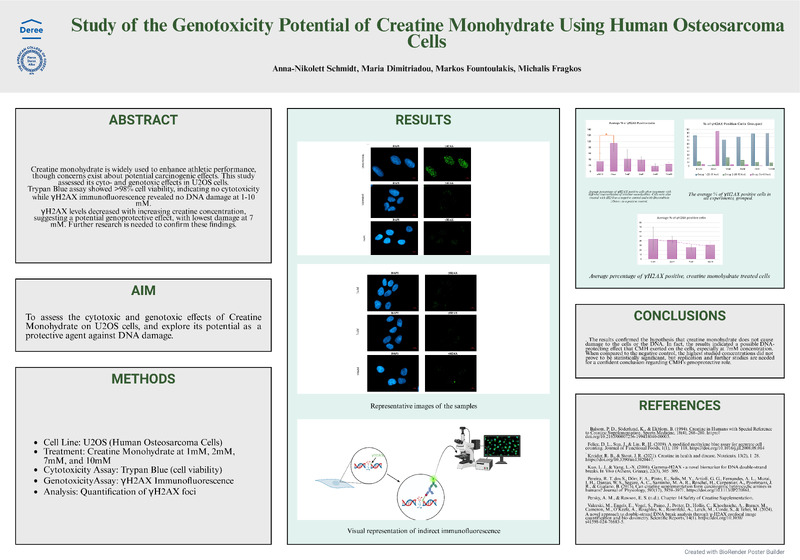 Study of the Genotoxicity Potential of Creatine Monohydrate Using Human Osteosarcoma Cells"Creatine monohydrate is a widely used supplement for enhancing athletic performance. While generally considered safe, concerns have been raised about its potential to promote carcinogenic compounds. This study investigated its cyto- and genotoxic effects on human osteosarcoma (U2OS) cells. Cytotoxicity, assessed using the Trypan Blue assay, showed >98% cell viability, indicating no toxic effects. Genotoxicity was evaluated using γH2AX immunofluorescence to detect DNA double-strand breaks. No DNA damage was observed at concentrations of 1–10 mM. Interestingly, γH2AX staining decreased with increasing creatine concentrations, suggesting a potential genoprotective effect. At 7 mM, cells showed particularly low levels of DNA damage. Further research is needed to confirm these findings and identify optimal protective concentrations."
-
Effect of Neutral and Acidified Extraction Protocols on the Phenolic Composition and Antibacterial Properties of Arbutus unedo L. Leaf ExtractsThis study examines how extraction conditions influence the phenolic composition and antibacterial activity of Arbutus unedo L. leaf extracts. Neutral and acidified protocols were compared using phytochemical screening and in vitro antibacterial assays against Staphylococcus aureus, Escherichia coli, and Pseudomonas aeruginosa. Antibacterial activity was assessed by microdilution with CFU confirmation, while TLC provided chemical profiling. Neutral extracts showed no activity, whereas acidified extracts inhibited S. aureus and weakly affected P. aeruginosa, with no effect on E. coli. Results highlight the importance of extraction methodology and support further investigation into phenolic compounds and synergistic antibacterial strategies.
-
Antioxidant Evaluation of Hydroxylated Benzimidazole and Curcumin Analogues Using DPPH, ABTS, and FRAP Assays"Oxidative stress significantly contributes to the development of multiple diseases, which emphasizes the importance of identifying effective antioxidant agents. In this study, antioxidant activity of eight structurally related compounds was assessed using three alternative in vitro assays, including DPPH radical scavenging, ABTS radical cation decolorization, and ferric reducing antioxidant power (FRAP). These compounds were natural curcumin, the analogues of curcuminoids, and benzimidazole compounds. The experiments were carried out in 96-well plates which contained negative and positive controls. Serial dilutions were done to assess responses that were concentration dependent. Compounds with free phenolic hydroxyl groups by hydrogen atom transfer (HAT) mechanisms displayed strong radical-scavenging activity in DPPH and ABTS assays and the findings showed strong structure activity relationships. Electron-donating functional groups, like dimethylamino groups, in compounds containing neither phenolic groups, led to higher reducing power in the FRAP assay, indicating that one-electron transfer (SET) mechanism was the dominating one. Benzimidazole derivatives were found to be mostly dependent on the number and location of phenolic functionalities as opposed to the heterocyclic core itself. In general, the findings indicate that even a slight structural modification can significantly impact the antioxidant behaviour and the paper has highlighted the importance of applying a diversity of methods to determine antioxidant capacities."
-
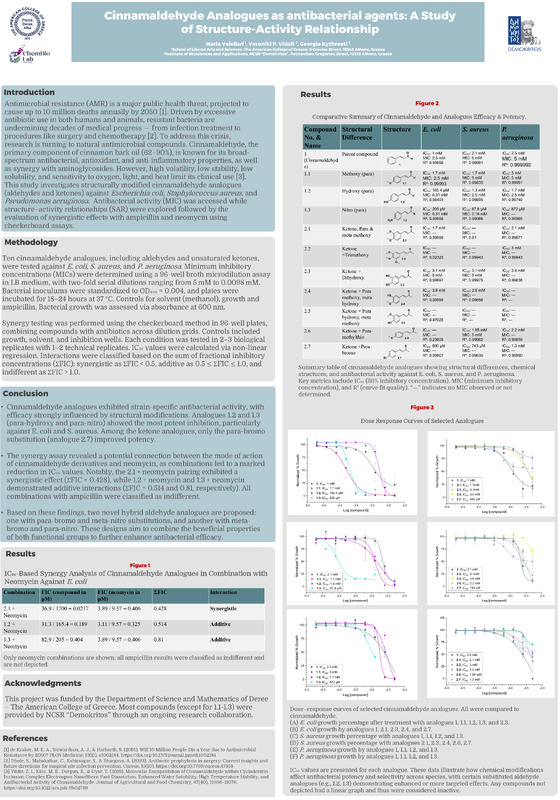 Evaluation of Cinnamaldehyde Analogues as Potential Therapeutic AgentsAntimicrobial resistance (AMR) is threat to public health, driving the need for new antibacterial agents. This study evaluated cinnamaldehyde and ten structural analogues against Escherichia coli, Staphylococcus aureus, and Pseudomonas aeruginosa. Antibacterial activity was assessed through high-throughput screening, minimum inhibitory concentration (MIC) determination, and checkerboard assays. Hydroxylated aldehyde derivatives showed overall enhanced activity, particularly against E. coli, while most ketone analogues exhibited reduced efficacy. Structure–activity relationship (SAR) analysis suggested the significance of aldehyde retention and hydroxyl substitution. Synergy studies with standard antibiotics revealed mostly indifferent interactions with an exception of additive and antagonistic effects. These findings offer insights for designing cinnamaldehyde-based antibacterial compounds.
-
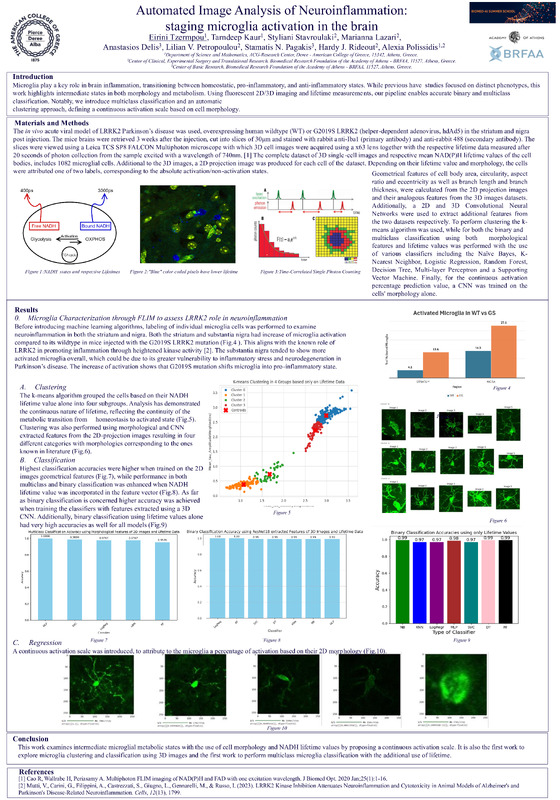 Automated Image Analysis of Neuroinflammation: staging microglia activation in the brainThis work, produced within the framework of the Biomedical Sciences Capstone course, presents a novel way to cluster, classify and detect microglia activation in mice brain slices with the use of confocal and fluorescence lifetime imaging microscopy (FLIM). By collecting multi-modal data from the acute murine viral model of G2019S and WT LRRK2, we proposed a continuous microglia activation scale additional to the already existing multiclass microglia activation grouping, with the use of lifetime data and 3D cell images.
-
Advancing Medical Diagnostics via Artificial Intelligence: A Simulation-Driven Approach to Disease DetectionThe emergence of artificial intelligence (AI) technology represents a significant breakthrough in the field of medicine. Advanced AI tools such as Convolutional Neural Networks (CNNs) and Generative Adversarial Networks (GANs) enhance diagnostic accuracy, accelerate disease detection, and enable personalized treatment plans. In clinical settings, AI streamlines workflows by automating repetitive tasks, thus allowing healthcare professionals the freedom to focus on patient care. Given the novelty of these models, experts consider the possible challenges in their widespread use, such as AI bias, data availability, interpretability, explainability, patient privacy, as well as external validation and regulatory limitations.
-
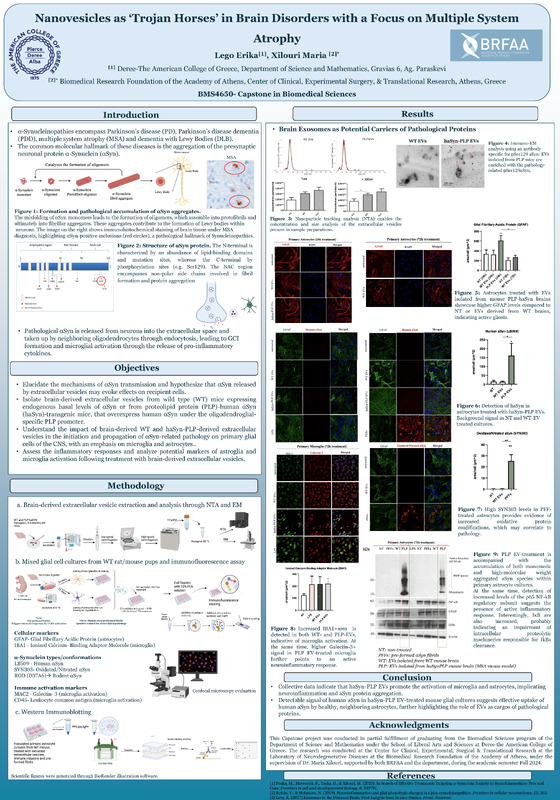 Capstone Project: “Nanovesicles as ‘Trojan Horses’ in Brain Disorders with a Focus on Multiple System Atrophy”Neurodegenerative disorders along with cardiovascular diseases and cancer are the leading causes of morbidity worldwide characterized by a number of motor and non-motor dysfunctions. α-Synucleinopathies such as Parkinson’s disease (PD), dementia with Lewy bodies (DLB), and Multiple System Atrophy (MSA) are linked to misfolding and aggregation of α-Synuclein (αSyn), a neuronal protein involved in synaptic communication. While PD and DLB feature αSyn aggregates in neurons, MSA is marked by αSyn accumulation in oligodendrocytes. Aggregated αSyn can propagate between cells in a prion-like manner, triggering neuroinflammation and degeneration. Exosomes, small extracellular vesicles released by neurons and glial cells, play a role in spreading αSyn pathology but also hold promise as therapeutic tools. This laboratory-based study investigates the role of brain-derived wild-type and PLP-human αSyn exosomes in MSA, focusing on their impact on neuroinflammation and protein aggregation, and explores their dual role as scavengers and transmitters of pathology and as potential therapeutic agents.